



Bin Tippers vs Manual Emptying: Reducing Workplace Strain Injuries
In many workplaces, emptying waste bins is a routine task that often goes unnoticed. However, in environments such as schools, cafés, hospitality venues, commercial kitchens, offices, and local councils, manually lifting and emptying bins can lead to significant musculoskeletal strain injuries. Repetitive bending, lifting, and twisting motions place unnecessary pressure on workers’ backs, shoulders, and arms.
As workplace safety standards continue to tighten, organisations are increasingly turning to mechanical assistance to reduce injury risks and improve operational efficiency. One practical solution designed specifically for lower-volume waste handling environments is the Ezi-MT Manual Bin Lifter.
This article explores the difference between manual bin emptying and bin tipping equipment, the workplace injury risks associated with manual handling, and how the Ezi-MT Manual Bin Lifter helps organisations reduce strain injuries while remaining compliant with safety standards.
The Hidden Risks of Manual Bin Emptying
In many workplaces, staff still empty bins by manually lifting them and tipping the contents into larger containers or dumpsters. While this may seem manageable for lighter loads, problems arise when bins become heavy or when the task is repeated multiple times throughout the day.
Common hazards associated with manual bin emptying include:
1. Musculoskeletal Disorders (MSDs)
Repeated lifting of bins can lead to muscle strain and joint injuries, particularly affecting:
-
Lower back
-
Shoulders
-
Wrists
-
Knees
These injuries are often caused by awkward lifting positions, especially when workers must bend over and twist while tipping the bin.
2. Cumulative Strain from Repetitive Tasks
Even if a bin weighs less than 20 kg, repeatedly lifting and tipping it throughout a shift can result in cumulative strain. Over time, this can lead to:
-
Chronic back pain
-
Tendonitis
-
Rotator cuff injuries
These injuries frequently develop gradually and may go unnoticed until they become severe enough to require medical attention.
3. Loss of Control When Lifting Heavy Bins
Wheelie bins commonly used in workplaces range from 60L to 240L in capacity. When full, these bins can be extremely heavy and unstable during manual tipping.
Workers may struggle to maintain control, leading to:
-
Sudden jerking motions
-
Dropped bins
-
Spillage of waste
-
Impact injuries
4. Workplace Compliance Risks
Many workplace safety regulations require employers to eliminate or minimise manual handling risks wherever possible. Failing to address these hazards can expose organisations to:
-
Workplace injury claims
-
Workers’ compensation costs
-
Regulatory penalties
-
Reduced productivity due to employee absence

Why Bin Tippers Are Becoming Essential
To address manual handling hazards, many organisations are adopting bin tippers or bin lifters. These devices allow workers to empty bins using mechanical assistance rather than relying solely on physical strength.
Bin tippers offer several safety advantages:
-
Controlled lifting and tipping motion
-
Reduced bending and twisting
-
Improved load stability
-
Lower physical strain on workers
While many industrial bin tippers use hydraulic systems or powered lifting mechanisms, these machines can be expensive, heavy, and unnecessary for low-volume users.
For smaller workplaces, a manual bin lifting solution can provide the same safety benefits without the cost or complexity of powered equipment.
Introducing the Ezi-MT Manual Bin Lifter
The Ezi-MT Manual Bin Lifter is an economical and practical bin tipping solution designed specifically for workplaces that handle smaller volumes of waste.
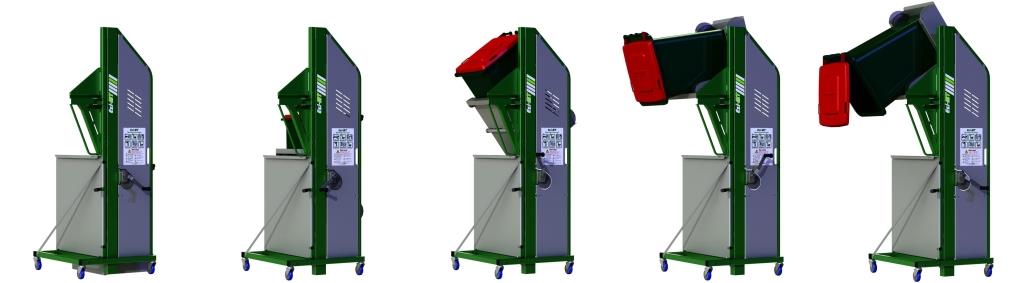
Instead of relying on hydraulic systems, the Ezi-MT Manual Bin Lifter uses a hand winch-powered mechanism that allows workers to safely raise and tip wheelie bins without heavy lifting.
With a capacity of up to 120 kg and compatibility with 60L, 80L, 120L, 140L, and 240L bins, it provides a versatile solution for organisations seeking safer waste handling practices.
Key Features of the Ezi-MT Manual Bin Lifter
Lightweight and Easy to Move
Weighing only 110 kg, the Ezi-MT Manual Bin Lifter is significantly lighter than many industrial bin tipping systems.
Its compact footprint and mobility make it ideal for:
-
Schools
-
Cafés and restaurants
-
Commercial kitchens
-
Small retail stores
-
Office buildings
-
Local council facilities
The unit is equipped with 100 mm Blue Resilex castors, allowing it to be easily manoeuvred between work areas.
Hand Winch Lifting Mechanism
One of the defining features of the Ezi-MT Manual Bin Lifter is its manual hand winch system.
Instead of lifting bins manually, operators simply turn the winch handle to raise the bin cradle. This controlled lifting motion significantly reduces the physical effort required to empty heavy bins.
The winch mechanism also provides:
-
Smooth and controlled lifting
-
Reduced operator fatigue
-
Improved safety during tipping
This design allows organisations to achieve workplace health and safety compliance without investing in expensive hydraulic machinery.
Safe and Stable Tipping Design
A key safety innovation of the Ezi-MT Manual Bin Lifter is its stable tipping geometry.
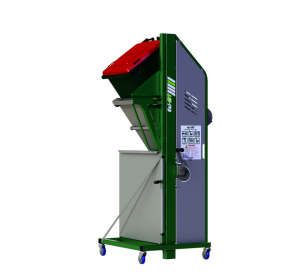
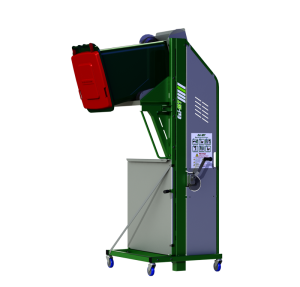
Throughout the entire tipping cycle, the weight of the bin remains within the footprint of the machine. This ensures that the centre of gravity remains stable, preventing the equipment from tipping or becoming unstable during operation.
This design feature provides several safety advantages:
-
Reduced risk of machine tipping
-
Improved control when handling heavy bins
-
Increased operator confidence
For workplaces concerned about safety, stability is one of the most important design considerations in any bin lifting system.
Designed for Environmental Sustainability
Environmental impact was considered from the very beginning of the Ezi-MT Manual Bin Lifter design process.
Several features contribute to its sustainability:
Flat-pack shipping
The unit can be shipped flat-packed, reducing transport volume and lowering carbon emissions.
No powered components
Because the machine operates manually, it generates no electronic waste and consumes no electricity.
Fully recyclable materials
The product is designed to be completely recyclable at the end of its service life.
These factors make the Ezi-MT Manual Bin Lifter an environmentally responsible choice for organisations seeking sustainable equipment solutions.
Real-World Applications of the Ezi-MT Manual Bin Lifter
The Ezi-MT Manual Bin Lifter is particularly well suited for workplaces where waste bins must be emptied regularly but where a full industrial bin tipper would be excessive.
Schools and Educational Facilities
Schools generate large volumes of waste from classrooms, cafeterias, and playgrounds. Cleaning staff often need to empty multiple wheelie bins each day.
Using manual lifting techniques can quickly lead to back strain. The Ezi-MT Manual Bin Lifter allows staff to empty bins safely while reducing repetitive lifting.
Cafés and Restaurants
Hospitality venues frequently deal with heavy food waste bins.
Kitchen staff often need to empty these bins during busy service periods. The Ezi-MT Manual Bin Lifter allows operators to tip bins quickly and safely without interrupting kitchen workflow.
Small Businesses and Offices
Many commercial buildings rely on janitorial staff to manage waste disposal.
Rather than manually lifting bins into larger dumpsters, the Ezi-MT Manual Bin Lifter provides a safer and more ergonomic solution.
Local Councils and Public Facilities
Local councils often manage waste bins in parks, community centres, and public venues.
The portability and durability of the Ezi-MT Manual Bin Lifter make it suitable for both indoor and outdoor use, requiring little maintenance over time.
Built for Durability and Long-Term Use
Despite its lightweight design, the Ezi-MT Manual Bin Lifter is extremely robust.
Key durability features include:
-
1.6 mm sheet metal guarding
-
Powder-coated frame
-
Zinc-plated cradle and guards
-
IP66 ingress protection
These protective features allow the equipment to operate in demanding environments while resisting corrosion and weather exposure.
The result is a machine that can be used outdoors for many years with minimal maintenance.
Safety Certifications and Standards
The Ezi-MT Manual Bin Lifter meets several internationally recognised safety standards, including:
-
AS/NZS 4024:2014 – Safety of machinery
-
ISO 13849-1:2006 – Safety-related control systems
-
Conformité Européene (CE) certification
Compliance with these standards ensures that the equipment meets rigorous safety and engineering requirements.
For organisations looking to improve workplace safety and demonstrate regulatory compliance, using certified equipment is essential.
Comparing Manual Emptying vs the Ezi-MT Manual Bin Lifter
| Factor | Manual Bin Emptying | Ezi-MT Manual Bin Lifter |
|---|---|---|
| Worker strain | High | Low |
| Risk of injury | Significant | Greatly reduced |
| Stability during tipping | Unpredictable | Controlled |
| Compliance with safety guidelines | Limited | Strong |
| Operational efficiency | Moderate | Improved |
The comparison clearly shows that using mechanical assistance significantly improves workplace safety and efficiency.
Improving Workplace Safety Through Better Equipment
Reducing workplace injuries does not always require large investments in automated machinery.
In many cases, the most effective solutions are simple, well-designed tools that eliminate unnecessary manual handling.
The Ezi-MT Manual Bin Lifter demonstrates how thoughtful engineering can transform a routine task into a safer and more efficient process.
By removing the need to manually lift and tip heavy bins, organisations can:
-
Protect workers from strain injuries
-
Improve workplace safety compliance
-
Increase operational efficiency
-
Reduce long-term injury costs
Conclusion
Manual bin emptying remains a surprisingly common source of workplace strain injuries. Repetitive lifting, awkward postures, and unstable loads all contribute to musculoskeletal disorders among workers responsible for waste handling.
Bin tippers offer a practical solution to these challenges, especially in workplaces where safety and efficiency are priorities.
For organisations that require a cost-effective, reliable, and environmentally responsible bin tipping solution, the Ezi-MT Manual Bin Lifter provides a highly practical alternative to manual emptying.
With its hand winch-powered lifting system, stable tipping design, lightweight construction, and compliance with recognised safety standards, it delivers a safer way to handle everyday waste disposal tasks.
Investing in equipment like the Ezi-MT Manual Bin Lifter is not just about improving workflow—it is about protecting workers and creating safer workplaces for the long term. Contact us now.