


Bin Tippers for Food Industry: Standard vs Hygienic Custom Frames
Food manufacturing facilities need efficient material handling systems that support productivity, workplace safety and hygiene. Bin tipping helps transfer ingredients into mixers, hoppers and conveyors.
Bin Tippers for Food Industry applications require careful selection to address food residues, moisture, cleaning chemicals and equipment accessibility. Frame materials, surface finishes and bin compatibility all influence suitability.
Standard configurations may suit general handling tasks, while stainless steel construction and customised frames can support specific food-processing requirements.
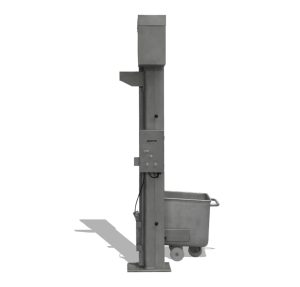
The Simpro EurOver Column-Lift Stainless Steel BinTipper, available from Emoveit, is designed to tip compatible Eurobins into processing equipment. This article compares standard and hygienic designs to help businesses choose suitable Bin Tippers for Food Industry.
Understanding material requirements, cleaning procedures and production layouts helps manufacturers select Bin Tippers for Food Industry that meet their operational needs. The right configuration can improve ingredient handling while supporting hygiene and maintenance requirements.
For food manufacturers assessing Bin Tippers for Food Industry, the EurOver offers a stainless steel solution worth considering.
1. Why Bin Tippers Matter in Food Production
Food manufacturing often involves transferring ingredients from storage containers into mixers, blending equipment, hoppers and conveyors. Depending on the production process, these materials may include flour, grains, powdered ingredients and other bulk food components.
Manually lifting and tipping heavy containers can require considerable physical effort. Repeated handling may also increase the risk of musculoskeletal injuries, particularly when workers perform awkward movements or manage heavy loads throughout a shift.
Mechanical tipping equipment provides a controlled way to raise and empty compatible containers without requiring workers to manually invert them.
Bin Tippers for Food Industry applications can support several operational objectives:
- Reduce manual lifting and tipping of heavy containers.
- Position ingredients at suitable heights for processing equipment.
- Improve consistency during repetitive material transfers.
- Reduce unnecessary handling steps between production stages.
- Support more organised ingredient-handling workflows.
- Help integrate container tipping with existing production lines.
The actual benefits depend on the equipment, production layout and handling process. Workers may still need to move bins into position, operate controls and manage the surrounding workflow.
Food manufacturers must also consider hygiene. Equipment that handles ingredients should be suitable for the environment, compatible with the facility’s cleaning procedures and appropriate for the materials being processed.
2. Understanding Standard Bin Tippers
Standard bin tippers lift and invert containers to discharge materials into receptacles or processing equipment. Depending on the model, they may use electric, hydraulic or mechanical lifting systems for material handling, waste management and ingredient transfer.
In food manufacturing, standard configurations may suit areas with less stringent hygiene requirements or applications involving closed containers. Some models also offer stainless steel construction and specialised cradles.
The term standard does not automatically mean unsuitable for food production. Businesses evaluating Bin Tippers for Food Industry should consider the operating environment, cleaning procedures and equipment specifications.
Selecting appropriate Bin Tippers for Food Industry requires assessing bin compatibility, material handling needs and hygiene requirements before choosing a configuration.
When is a standard configuration suitable?
A standard bin tipper may be appropriate when:
- The machine operates in a general industrial area.
- Containers remain closed during handling.
- Frequent washdown is not required.
- The construction materials suit the operating environment.
- Cleaning and maintenance requirements can be met.
- The bin dimensions and load are compatible with the machine.
For example, a warehouse transferring sealed ingredient containers may have different requirements from a food-processing facility tipping ingredients directly into an open mixer.
The important consideration is whether the selected equipment meets the operational, hygiene and safety requirements of its intended use.
3. What Makes a Hygienic Bin Tipper Different?
Hygienic bin tippers are designed with greater consideration for cleaning access, material compatibility and the conditions found in food-processing environments.
Their construction may incorporate stainless steel frames, accessible components and design features intended to reduce areas where food residues or moisture can accumulate.
Bin Tippers for Food Industry applications may benefit from these features when equipment operates in areas requiring frequent cleaning or where corrosion resistance is an important consideration.
Stainless steel construction
Stainless steel is widely used in food-processing equipment because suitable grades provide corrosion resistance and durable surfaces.
The Simpro EurOver features bead-blasted 304 stainless steel construction, together with food-grade welding and components identified in its product information.
These features make it relevant to food manufacturers evaluating equipment for hygiene-sensitive applications.
However, stainless steel alone does not guarantee hygienic suitability. Material performance depends on the operating environment, cleaning chemicals, temperatures and exposure conditions.
Accessible components
Equipment should allow personnel to access relevant areas during cleaning, inspection and maintenance.
The EurOver features a single-mast design intended to improve accessibility, along with stainless steel component covers.
These design features can support cleaning activities, although the effectiveness of cleaning depends on the complete installation and the procedures used by the facility.
Corrosion resistance and maintenance
Moisture and cleaning chemicals can affect industrial equipment over time. Selecting suitable materials and maintaining the machine correctly can help minimise corrosion-related problems.
Businesses should inspect the frame, covers, retaining mechanism and lifting components regularly. Damaged surfaces, worn parts and areas where residues accumulate should be addressed promptly.
4. Standard vs Hygienic Custom Frames
The difference between standard and hygienic bin tippers involves more than the material used to construct the frame. Equipment design, cleaning requirements, bin compatibility and production-line integration also influence the selection.
The following comparison highlights the main considerations.
| Feature | Standard Configuration | Hygienic or Customised Configuration |
|---|---|---|
| Frame material | Depends on the selected model | May use stainless steel suited to the application |
| Surface finish | Based on the standard specification | Selected with cleaning and environmental conditions in mind |
| Cleaning access | Depends on component layout | May provide improved access to relevant areas |
| Corrosion resistance | Depends on materials and exposure | Materials selected to suit moisture and cleaning requirements |
| Bin compatibility | Standard cradle or available options | May incorporate a specialised cradle |
| Tipping height | Determined by the model | Selected to suit the receiving equipment |
| Production integration | Suitable for compatible layouts | May require application-specific modifications |
| Initial cost | Depends on the specification | May be higher due to specialised materials or engineering |
Standard equipment may be sufficient for straightforward applications. Hygienic configurations become more relevant when material selection, cleaning access or production requirements demand additional consideration.
Bin Tippers for Food Industry operations should be assessed according to the actual working conditions. A stainless steel machine may be appropriate for one facility, while another may require additional modifications to accommodate its bins, discharge height or cleaning procedures.
Customisation should solve a defined operational problem rather than add features that the business does not need.
5. Introducing the Simpro EurOver Column-Lift Stainless Steel BinTipper
The Simpro EurOver Column-Lift Stainless Steel BinTipper is designed to tip compatible Eurobins into hoppers, mixers and conveyors in food production environments.
Available from Emoveit, it features stainless steel construction and a vertical lifting mechanism for transferring ingredients into elevated processing equipment.
For businesses seeking Bin Tippers for Food Industry, the EurOver offers a practical option for hygienic material handling.
Key product specifications
| Specification | Details |
|---|---|
| Maximum bin weight | 300 kg |
| Compatible bin volumes | 200 L and 300 L Eurobins |
| Tipping height | Model-dependent, up to 2,500 mm |
| Construction | Bead-blasted 304 stainless steel |
| Lifting mechanism | Vertical worm-drive mechanism |
| Motor | 1.5 kW AC electric motor |
| Electrical supply | Three-phase mains supply |
| Machine width | 800 mm |
| Machine length | 1,380 mm |
| Bin retention | Quick-hitch retaining system |
Specifications can vary by model. Buyers should confirm the selected machine’s tipping height, dimensions, electrical requirements and other details with Emoveit before ordering.
Designed for food production
The EurOver’s stainless steel construction and accessible design make it worth considering where hygiene-related requirements influence equipment selection.
For manufacturers comparing Bin Tippers for Food Industry, the machine provides a dedicated option for transferring compatible Eurobins into processing equipment.
Its maximum rated bin weight of 300 kg provides capacity for substantial loads. Nevertheless, the loaded bin must remain within the machine’s rated capacity, and its dimensions and retaining arrangement must be compatible with the selected configuration.
6. Applications in Food Manufacturing
The effectiveness of a bin tipper depends on how well it fits into the production process.
Ingredient transfer into mixers
Food manufacturers may need to transfer ingredients from mobile bins into industrial mixers. The tipping height must provide adequate clearance above the receiving vessel, while the discharge arrangement must suit the material being handled.
For example, a facility handling dry ingredients may have different requirements from one processing wet or sticky materials.
Businesses should assess the discharge path, potential for spillage and cleaning requirements before selecting equipment.
Feeding production hoppers
Hoppers receive ingredients before they enter subsequent processing stages. A suitable bin tipper can raise compatible containers to the required height, supporting a consistent transfer process.
The machine must be positioned so that the bin and its contents can discharge correctly without interfering with surrounding equipment.
Supporting conveyor systems
Some production lines use conveyors to transport ingredients between processing stages. A bin tipper can provide a transfer point where compatible containers are emptied into the receiving system.
Clearance, guarding, operator access and the layout of adjacent equipment should be considered during installation.
These applications illustrate why Bin Tippers for Food Industry should be selected according to the material, receiving equipment and overall production workflow.
7. Why Hygienic Frame Design Matters
The frame supports the lifting mechanism and the load during operation. Its design also affects cleaning access, inspection and maintenance.
In food-processing environments, equipment should be assessed for areas where food residues, moisture or cleaning liquids could accumulate.
Reducing difficult-to-access areas
Poorly accessible joints, crevices and enclosed spaces can make cleaning more difficult.
Businesses should ask suppliers how the frame design affects access for routine cleaning and inspection.
The EurOver’s single-mast construction is intended to provide improved accessibility. However, the complete installation must still be assessed to determine whether all relevant areas can be cleaned effectively.
Selecting suitable materials
The EurOver uses 304 stainless steel, which offers corrosion resistance in many applications. Its suitability depends on the chemicals, temperatures and environmental conditions encountered during operation.
Where aggressive cleaning agents or specialised washdown procedures are involved, businesses should confirm material compatibility with the supplier.
Maintaining equipment condition
Even appropriate construction materials require regular inspection and maintenance.
Businesses should check for damage, corrosion, worn components and residues that may affect cleaning. Following the manufacturer’s maintenance instructions helps support equipment condition and operational reliability.
8. When Should Businesses Consider Custom Frames?
A standard configuration may not suit every production line. Customisation may be appropriate when the existing machine options cannot accommodate the facility’s specific operational requirements.
Specialised bin compatibility
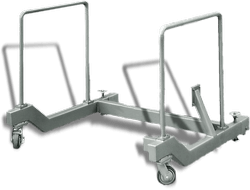
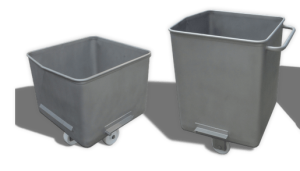
Containers vary in dimensions, retaining points and tipping characteristics. The EurOver is designed for compatible DIN 9797 Eurobins, with options that include a cradle for FoodCaps.
Businesses should provide accurate container specifications to the supplier rather than assuming that bins of similar dimensions will fit safely.
Required tipping height
The machine must reach the correct discharge height while maintaining adequate clearance around the bin and receiving equipment.
The EurOver is available in models with tipping-height ranges extending to approximately 2.5 m. The appropriate model depends on the required discharge point.
Measurements should include the receiving vessel, the bin’s position during tipping and overhead obstructions.
Production-line integration
A bin tipper may need to operate beside a mixer, hopper or conveyor. The installation must provide sufficient space for loading, tipping, cleaning and maintenance.
Where the standard configuration cannot accommodate the layout, application-specific engineering may be necessary.
Guarding and operator access
Customisation must not compromise machine stability, guarding or access to controls.
Any modification should be assessed by the equipment supplier or a suitably qualified engineering professional to confirm that the proposed configuration remains appropriate for the intended load and operating conditions.
For Bin Tippers for Food Industry, custom frames should address clearly identified needs involving hygiene, bin compatibility or production integration.
9. Food Safety and Cleaning Considerations
Hygienic equipment is only one component of an effective food safety management system for Bin Tippers for Food Industry applications.
Food businesses must consider the requirements that apply to their operations, including relevant provisions of the Australia New Zealand Food Standards Code.
Food Standards Australia New Zealand provides guidance on cleaning and sanitising, which can help businesses review their cleaning procedures.
Establish cleaning procedures
Cleaning procedures should identify the machine areas requiring attention, the appropriate cleaning method and the required frequency.
Personnel should follow the manufacturer’s instructions and the facility’s hygiene procedures. Electrical and mechanical components must be handled according to the machine’s instructions, particularly when moisture or cleaning chemicals are involved.
Understand cleaning and sanitising
Cleaning removes visible soil, food residues and other unwanted material. Sanitising is a separate process intended to reduce microorganisms to an appropriate level.
The required procedures depend on the application and the facility’s food safety controls. Stainless steel construction does not eliminate the need for cleaning or sanitising when selecting Bin Tippers for Food Industry.
Inspect the machine regularly
Inspections should cover the frame, retaining mechanism, lifting components, guards and accessible surfaces.
Any damage, corrosion or defects should be assessed promptly. These checks apply to all Bin Tippers for Food Industry, regardless of whether the machine uses a standard or hygienic configuration.
10. Workplace Safety and Manual Handling
Moving heavy bins can involve pushing, pulling, positioning and controlling loads, potentially exposing workers to awkward postures and repetitive physical effort. Bin Tippers for Food Industry applications can help reduce some manual handling demands, although risks still require assessment.
Mechanical tipping equipment can support safer workflows when properly selected and operated. Businesses choosing Bin Tippers for Food Industry should assess the complete handling task and follow Safe Work Australia’s guidance on hazardous manual tasks.
When selecting a bin tipper, businesses should consider:
- The effort required to position bins.
- Load stability during lifting and tipping.
- Compatibility between the bin and retaining mechanism.
- Potential crushing or trapping hazards.
- Operator access to controls and emergency stops.
- Floor conditions and installation stability.
- Guarding, training and maintenance requirements.
The EurOver’s quick-hitch retaining system is designed to simplify positioning of compatible bins. Operators must still follow the manufacturer’s instructions and use the machine within its rated limits.
A workplace risk assessment should address the complete task, including loading, positioning, tipping and removing the empty bin.
11. How to Select the Right Bin Tipper
Before purchasing Bin Tippers for Food Industry, businesses should evaluate their material handling requirements and the conditions in which the equipment will operate.
Step 1: Identify the material. Determine whether the machine will handle dry ingredients, wet materials or other products. Consider the material’s weight, flow characteristics and potential to leave residues.
Step 2: Confirm bin compatibility. Record the bin dimensions, volume, retaining arrangement and maximum loaded weight. Confirm that the proposed machine supports the specific container.
Step 3: Measure the discharge height. Establish the height of the receiving hopper, mixer or conveyor. Allow for the bin’s position and the clearance needed during tipping.
Step 4: Assess hygiene requirements. Review cleaning frequency, chemical exposure, washdown conditions and access for inspection. These factors help determine whether standard or stainless steel construction is appropriate.
Step 5: Check the installation. Consider available floor space, overhead clearance, electrical supply and surrounding equipment. The EurOver requires a three-phase electrical supply, so the selected model’s electrical specifications should be confirmed before installation.
Step 6: Discuss available configurations. Ask Emoveit about compatible bins, cradle options, guarding and any modifications required to suit the production process.
Step 7: Plan maintenance. Confirm cleaning instructions, inspection requirements, servicing arrangements and access to replacement components.
Following these steps helps businesses compare equipment based on operational suitability rather than capacity or purchase price alone.
12. Is the EurOver Right for Your Facility?
The EurOver is worth considering for Bin Tippers for Food Industry applications requiring stainless steel construction and compatible Eurobin tipping.
Its 300 kg maximum rated bin weight, model-dependent tipping heights and accessible single-mast design make it a potential option for Bin Tippers for Food Industry.
Applications include transferring ingredients into mixers, emptying Eurobins into hoppers and feeding conveyors using Bin Tippers for Food Industry.
Before selecting Bin Tippers for Food Industry, confirm bin compatibility, loaded weight, discharge height, available space, electrical supply and cleaning procedures.
The EurOver supports food-production material handling, but selecting suitable Bin Tippers for Food Industry requires assessing the complete installation and the facility’s food safety requirements.
Conclusion: Choosing Between Standard and Hygienic Bin Tippers
Selecting the right equipment depends on load requirements, cleaning procedures and production layout. Bin Tippers for Food Industry applications may require stainless steel construction, accessible components and customised frames.
Standard configurations suit general handling tasks, while hygienic designs can better support food-processing requirements. Custom frames can accommodate specific bin dimensions and discharge heights.
The Simpro EurOver Column-Lift Stainless Steel BinTipper is designed to transfer compatible Eurobins into hoppers, mixers and conveyors. With a maximum rated bin weight of 300 kg and 304 stainless steel construction, it is worth considering for Bin Tippers for Food Industry applications.
Before purchasing, assess bin compatibility, tipping height, hygiene requirements and installation conditions to select suitable Bin Tippers for Food Industry.
For assistance choosing Bin Tippers for Food Industry, contact Emoveit on 1300 213 010 or email sales@emoveit.com.au.