



Why Choose an Electric Tracked Dumper for Heavy Material Handling?
Introduction
Moving heavy materials across a worksite can be physically demanding, time-consuming and inefficient when the right equipment is not available. Soil, sand, gravel, construction materials, landscaping supplies and other bulk loads often need to be transported repeatedly between different areas of a site.
Traditional manual handling methods can require significant physical effort, while conventional wheeled equipment may not always provide the traction or manoeuvrability required for challenging surfaces. This is where an Electric Tracked Dumper can provide a practical alternative.
An electric tracked dumper combines powered material transport with tracked mobility, allowing businesses to move loads across work areas while reducing reliance on manual handling. For applications where access, traction, noise and emissions are important considerations, an electric machine can offer additional advantages over conventional equipment.
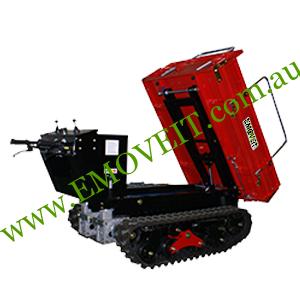
The ELK-T500 Hi Lift Mini Dumper on Track is one example of this type of equipment. With a 500 kg capacity, 24V DC/1500W motor and tracked drive system, it is designed to transport and tip materials while providing the mobility required for demanding work environments.
But what makes an Electric Tracked Dumper useful for heavy material handling, and when should businesses consider one?
What Is an Electric Tracked Dumper?
An Electric Tracked Dumper is a powered material-handling machine designed to transport and discharge bulk materials. Instead of relying on conventional wheels, a tracked model uses continuous tracks to provide traction and stability across a range of work surfaces.
The electric drivetrain replaces the combustion engine found in many traditional dumpers. This can make electric models particularly useful for applications where reduced exhaust emissions, lower operating noise or indoor operation are important.
Depending on the model, electric tracked dumpers can be used to transport materials such as:
- Soil
- Sand
- Gravel
- Landscaping materials
- Building materials
- Waste
- Aggregates
- General bulk loads
The tracked configuration is particularly useful where the operating environment includes uneven or difficult surfaces.
Why Choose an Electric Tracked Dumper?
There are several reasons businesses may consider an Electric Tracked Dumper instead of relying entirely on manual handling or conventional equipment.
1. Improved Material Handling Efficiency
One of the biggest advantages is the ability to move substantially more material in a single trip than would normally be practical with manual equipment.
For example, repeatedly moving materials using wheelbarrows or other manually operated equipment requires workers to load, transport and unload smaller quantities over multiple trips.
A powered dumper changes this process.
The operator can load the machine, transport the material to the required location and use the tipping function to discharge the load. This can reduce the number of individual handling cycles required to move bulk materials.
The result can be a more consistent workflow, particularly on projects where materials need to be transported repeatedly throughout the day.
2. Tracked Drive Provides Additional Traction
The tracked design is one of the key reasons to consider an Electric Tracked Dumper.
Tracks distribute the machine’s weight over a larger contact area than conventional wheels. This can provide useful traction and stability when operating across surfaces that may be uneven, loose or difficult to navigate.
Depending on the application, this can include:
- Construction sites
- Landscaping projects
- Building sites
- Rural properties
- Groundworks
- Outdoor maintenance areas
- Uneven work surfaces
This doesn’t mean a tracked dumper is suitable for every terrain or operating condition. Surface conditions, gradients, load distribution and manufacturer specifications should always be considered before operation.
However, for applications where conventional wheeled equipment may struggle for traction, tracked mobility can be an important advantage.
3. Electric Operation for Indoor and Sensitive Environments
Another significant advantage of an Electric Tracked Dumper is the absence of combustion-engine exhaust during operation.
This can be particularly relevant when equipment needs to operate in enclosed or semi-enclosed areas where exhaust emissions can create additional ventilation requirements.
Electric equipment may also be preferable in environments where reducing engine noise is important.
Potential applications can include:
- Indoor construction projects
- Building restoration
- Warehouses and facilities
- Enclosed work areas
- Agricultural environments
- Landscaping projects near occupied buildings
- Sites where noise needs to be controlled
The suitability of any electric machine for indoor use should still be assessed against the specific ventilation, charging, surface and operational requirements of the site.
4. High-Lift Tipping Can Improve Workflow
Transporting material is only part of the job. The material must also be discharged at the correct location.
This is where a high-lift dumper can provide another practical advantage.
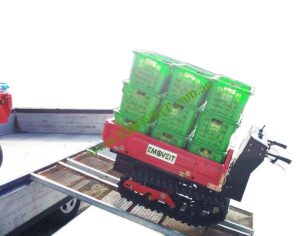
The ELK-T500 is a high-lift mini dumper, allowing material to be transported and tipped into an appropriate receiving location. This can help simplify workflows where materials need to be discharged into containers, skips or other elevated collection points.
Instead of manually removing material from the load area, the tipping mechanism allows the operator to discharge the contents using the machine’s powered function.
For repetitive material-handling operations, this can save time and reduce unnecessary manual handling.
5. 500 kg Load Capacity
The ELK-T500 has a 500 kg capacity, giving it considerably more material-handling capability than equipment intended only for light loads.
Capacity is an important factor when selecting an Electric Tracked Dumper because the machine needs to match the requirements of the application.
Businesses should consider:
- Typical load weight
- Maximum load weight
- Material density
- Travel distance
- Ground conditions
- Frequency of trips
- Tipping height
- Available operating space
A machine should never be selected based solely on its maximum rated capacity. The complete operating environment needs to be considered, including terrain and the way the load is distributed.
6. Reduced Dependence on Manual Handling
Manual material handling can become inefficient when heavy materials need to be transported repeatedly.
Consider a landscaping project where soil, gravel or other bulk material needs to be moved from one part of the site to another.
Without powered equipment, workers may need to repeatedly load and transport smaller quantities. This increases the number of handling cycles and can make the overall job more labour-intensive.
An Electric Tracked Dumper provides a powered alternative.
The machine performs the transport function while the operator controls the equipment. This can help businesses reduce the amount of repetitive physical effort required to move bulk materials.
The objective isn’t necessarily to eliminate manual work entirely. Instead, the dumper can be used to mechanise the most repetitive and physically demanding part of the material-handling process.
Electric Tracked Dumper vs Conventional Wheeled Equipment
The decision between tracked and wheeled equipment should be based on the application.
Wheeled dumpers can be highly effective on firm, relatively smooth surfaces. They can also provide good manoeuvrability in suitable environments.
Tracked equipment becomes more attractive when traction and surface conditions are major considerations.
Tracked dumpers may be preferable when:
- The ground is uneven
- Surfaces are loose
- Additional traction is required
- The worksite has challenging terrain
- Stability is an important consideration
- The machine needs to operate across varied surfaces
Wheeled equipment may be preferable when:
- The surface is firm and smooth
- Long-distance travel is required
- High-speed movement is important
- The operating area is well suited to wheels
- The machine will frequently operate on paved surfaces
The right choice therefore depends on the worksite rather than simply choosing the machine with the highest capacity.
Electric vs Petrol or Diesel Dumpers
Another consideration is the power source.
Traditional petrol and diesel dumpers remain widely used for outdoor construction and earthmoving applications. They can provide high power and long operating periods where refuelling infrastructure is readily available.
Electric dumpers offer a different set of advantages.
Electric dumpers can offer:
No direct exhaust emissions during operation
An electric drivetrain does not produce combustion exhaust at the point of use.
Lower operating noise
Electric motors can operate with less mechanical and engine noise than combustion-powered alternatives, although actual noise levels depend on the complete machine and operating conditions.
Indoor application potential
The absence of combustion exhaust can make electric equipment particularly relevant to suitable indoor or enclosed applications, subject to site requirements.
Straightforward electric drive
Electric drive systems can provide controlled movement and eliminate the need for on-site fuel storage and refuelling.
However, battery charging, operating time, charging infrastructure and duty cycle should all be considered when evaluating an electric dumper.
Where Can an Electric Tracked Dumper Be Used?
The versatility of an Electric Tracked Dumper makes it suitable for a variety of material-handling applications.
Construction
Construction sites frequently require materials to be moved between different areas. An electric tracked dumper can be used for transporting suitable bulk materials around the site.
Landscaping
Landscaping projects can involve large quantities of soil, mulch, gravel and other materials. A powered dumper can help reduce the number of manual transport cycles.
Groundworks
Where ground conditions are uneven or difficult, the tracked configuration can provide useful traction for material transport.
Agriculture and rural applications
Electric dumpers may also be useful for moving suitable materials around farms, properties and other rural environments, depending on terrain and load requirements.
Building restoration
Electric equipment can be particularly attractive for restoration projects where reducing exhaust emissions and operating noise is important.

What Should You Consider Before Buying an Electric Tracked Dumper?
Choosing the right Electric Tracked Dumper requires more than looking at the load capacity.
Load capacity
Determine the typical weight of the materials being transported. The machine should have an appropriate rated capacity for the application.
Terrain
Consider whether the machine will operate on concrete, gravel, soil, slopes or uneven ground.
Tipping requirements
Think about where the material needs to be discharged. A high-lift model may be particularly useful when materials need to be tipped into elevated containers or collection points.
Operating environment
If the dumper will be used indoors or near occupied areas, noise and emissions may be important selection factors.
Operating frequency
A machine used occasionally has different requirements from one operating throughout an entire working day.
Battery and charging
Electric equipment needs a suitable charging strategy. Businesses should consider operating hours, charging time, available power and whether batteries can be charged between shifts.
Site access
Measure doorways, pathways, ramps and other access points before selecting a machine. Compact dimensions and manoeuvrability can be particularly important on restricted worksites.
Why the ELK-T500 Is Worth Considering
The ELK-T500 Hi Lift Mini Dumper on Track combines several features that make it relevant to demanding material-handling applications.
Its 500 kg load capacity provides the ability to transport substantial loads, while its tracked configuration is designed to provide mobility across challenging work areas.
Its 24V DC / 1500W electric motor provides powered operation without relying on a conventional combustion engine.
The high-lift tipping configuration is another important feature, particularly where materials need to be discharged into an elevated receiving point.
Together, these features make the ELK-T500 an example of how electric power, tracked mobility and powered tipping can be combined into a single material-handling solution.
Is an Electric Tracked Dumper Right for Your Application?
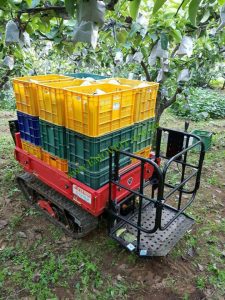
An Electric Tracked Dumper can be a practical choice when a business needs to move bulk materials efficiently while also considering traction, operating environment and manual handling requirements.
It is particularly worth considering when:
- Materials need to be moved repeatedly
- Manual transport is becoming inefficient
- The worksite has uneven or loose surfaces
- Reduced exhaust emissions are desirable
- Operating noise is an important consideration
- Loads need to be tipped rather than manually unloaded
- A compact powered solution is required
However, every application is different. Load weight, terrain, travel distance, tipping height, operating hours and charging requirements should all be assessed before selecting a machine.
Conclusion
An Electric Tracked Dumper can provide a practical way to mechanise repetitive material-handling tasks while combining electric operation with the traction advantages of a tracked drive system.
For businesses moving soil, gravel, construction materials, landscaping supplies or other bulk loads, the combination of powered transport and tipping can reduce repetitive manual handling and improve workflow efficiency.
The ELK-T500 Hi Lift Mini Dumper on Track demonstrates this approach with a 500 kg capacity, 24V DC/1500W electric motor and tracked configuration. Its high-lift tipping function also makes it relevant to applications where materials need to be discharged into elevated locations.
Ultimately, the best dumper depends on the specific application. Businesses should assess load requirements, terrain, tipping height, operating environment, duty cycle and charging requirements before choosing their equipment.
For organisations looking to improve how heavy materials are transported around a worksite, an Electric Tracked Dumper can be a useful alternative to relying solely on manual handling or conventional combustion-powered equipment.
To find out whether the ELK-T500 is suitable for your material-handling application, contact Emoveit to discuss your requirements.