



Are Electric Tugs Worth It? Alitrak vs Manual Handling Explained
Moving heavy trailers, caravans, wagons and commercial waste containers can be a physically demanding part of many workplaces. When these loads need to be repositioned repeatedly, relying on manual pushing or pulling can create unnecessary physical strain, reduce productivity and increase the risks associated with manual handling.
This is where electric pedestrian tow tugs can provide a practical alternative.
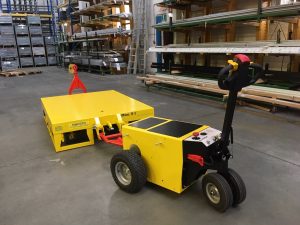
The Alitrak OT-2500 Outdoor Tug is designed to move heavy equipment with significantly less manual effort. With a 12,000 kg pulling capacity on a flat surface, a 2,500 W electric motor and three-wheel configuration, it provides a powered solution for applications where workers would otherwise need to manually manoeuvre heavy loads.
But are electric tugs actually worth the investment?
The answer depends on the type of work, frequency of movement, load weight, workplace conditions and the amount of manual effort involved. Looking at Alitrak vs Manual Handling helps demonstrate where an electric tug can provide operational and safety advantages.
When considering Alitrak vs Manual Handling, businesses can assess whether powered assistance is appropriate for repetitive heavy-load movement. Alitrak vs Manual Handling also highlights the potential benefits of reducing physical pushing and pulling.
For workplaces regularly moving heavy wheeled equipment, Alitrak vs Manual Handling provides a useful comparison between powered towing and traditional manual movement. Ultimately, Alitrak vs Manual Handling should be evaluated based on the specific handling requirements, workplace conditions and safety considerations.
What Is the Alitrak OT-2500?
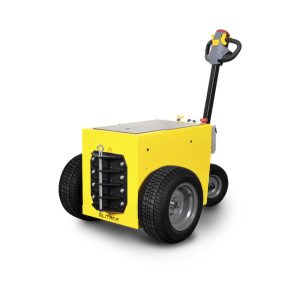
The Alitrak OT-2500 is a three-wheel, zero-emission electric pedestrian tow tug designed for outdoor and industrial applications.
It uses an EASY STEER control mechanism integrated into the tiller head, allowing the operator to control movement while walking behind the machine. The design is intended for moving trailers, caravans, wagons and heavy commercial equipment across suitable surfaces.
Key specifications include:
- Pulling capacity: Up to 12,000 kg on a flat surface
- Loading capacity: Up to 1,000 kg on a flat surface
- Motor: 24V AC, 2,500 W
- Wheels: 3
- Fast pulling speed: 4 km/h
- Slow pulling speed: 2.5 km/h
- Fast pushing speed: 3 km/h
- Slow pushing speed: 1.5 km/h
- Battery: AGM, 4 × 12V 100Ah C20
- Recharge time: Approximately 8 hours
- Weight: 425 kg
- Length: 1,300 mm
- Width: 880 mm
- Height: 1,300 mm
The OT-2500 also includes a dashboard display showing remaining battery charge, equipment faults and operating hours. Its electromagnetic parking brake, polyurethane-filled wheels and oil-bath differential are designed for demanding handling environments.
For more information, see the Alitrak OT-2500 product page.
Alitrak vs Manual Handling: What Is the Difference?
Manual handling involves workers using physical force to lift, push, pull, carry or otherwise move loads. While some manual movement is unavoidable in workplaces, repeatedly moving heavy equipment can place considerable physical demands on workers.
The important consideration is not simply whether a worker can move a load manually. The bigger question is whether manual handling is the most efficient and appropriate method for the task.
For example, a trailer might be relatively easy to reposition once. If the same trailer needs to be moved several times every day, however, the cumulative physical effort can become significant.
An electric tug changes the task from manually generating the force required to move the load to operating powered equipment that generates the pulling or pushing force.
This can make a substantial difference in repetitive applications.
Why Repetitive Manual Handling Can Become a Problem
Manual handling risks are not limited to lifting heavy objects.
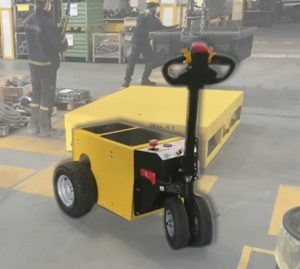
Pushing and pulling are also important considerations, particularly when loads are heavy, awkward, difficult to steer or positioned on surfaces that increase rolling resistance.
Repeated manual movement can contribute to:
- Physical fatigue
- Musculoskeletal strain
- Reduced productivity
- Increased recovery time between tasks
- Greater difficulty manoeuvring heavy equipment
- Inconsistent handling performance as workers become fatigued
Workplace conditions can make the task even more demanding. Uneven surfaces, restricted areas, slopes and tight manoeuvring spaces may make heavy loads more difficult to control.
An electric tug does not eliminate every workplace risk, but it can reduce the amount of physical force an operator needs to apply to the load.
How the OT-2500 Reduces Physical Effort
The main advantage of the OT-2500 is its powered movement capability.
With a stated pulling capacity of up to 12,000 kg on a flat surface, the tug is designed for applications involving loads far beyond what would be practical for routine manual movement.
The operator controls the tug from the tiller rather than manually pushing or pulling the full load.
This is particularly useful when a workplace involves repetitive movement of:
- Trailers
- Caravans
- Wagons
- Waste containers
- Commercial equipment
- Industrial equipment on wheels
The OT-2500 can also be fitted with accessories such as a trailer ball or waste container connector, allowing the same tug to support different handling tasks.
This versatility can be important for businesses that need one powered handling solution across multiple applications.
Is a 12,000 kg Capacity the Same as Moving 12,000 kg Anywhere?
No.
This distinction is important when evaluating electric tugs.
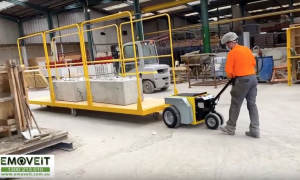
The stated 12,000 kg pulling capacity applies on a flat surface. Actual performance depends on workplace conditions, including surface characteristics, gradients, load configuration, rolling resistance, attachment method and other operating factors.
The OT-2500 has a loading capacity of up to 1,000 kg on a flat surface, which is different from its towing capacity.
Businesses should therefore assess the actual loads and operating environment before selecting equipment. A tug’s maximum rated capacity should not automatically be treated as the recommended operating capacity for every situation.
Proper workplace risk assessment, equipment selection and operator training remain essential.
Outdoor Handling Applications
The OT-2500 is specifically designed as an outdoor three-wheel electric tug, making it relevant to applications where loads need to be moved around yards, compounds and other external work areas.
Its three-wheel configuration is intended to support manoeuvrability, while the compact dimensions of 880 mm wide by 1,300 mm long can be useful in areas where larger vehicles may be impractical.
The tug can also be used on uneven terrain, subject to the specific operating conditions and manufacturer’s requirements.
Optional features such as superelastic wheels, wheel protections and ballast can further adapt the equipment to particular handling environments.
Australian Industries That Could Use the OT-2500
The OT-2500 can be relevant to a wide range of Australian industries where heavy wheeled loads need to be repositioned regularly.
1. Caravan and RV Businesses
Caravan dealerships, manufacturers and service centres may need to reposition caravans around yards and workshops.
Instead of relying on workers or vehicles to manually manoeuvre caravans into position, an electric tug can provide a dedicated method of controlled movement.
2. Transport and Logistics
Transport yards may regularly reposition trailers, equipment and other wheeled assets.
An electric tug can be particularly useful where trailers need to be moved short distances around a facility without bringing a larger towing vehicle into the area.
3. Waste Management
Waste management operations can involve heavy commercial waste containers that need to be repositioned around facilities.
The OT-2500 can be configured with a waste container connector, making this a potential application for powered movement.
4. Manufacturing
Manufacturing facilities often move production equipment, carts, trailers and other heavy items between work areas.
Where loads are repeatedly pushed or pulled manually, an electric tug can help reduce the physical force required from workers.
5. Warehousing and Distribution
Large warehouses and distribution centres may have heavy wheeled equipment, cages, trailers or specialised handling units that need to be repositioned.
An electric tug can provide another option where forklifts or other larger machines are not practical for short-distance movement.
6. Agriculture and Rural Operations
Farms, agricultural suppliers and rural businesses may need to move trailers, wagons and other equipment around yards.
A pedestrian electric tug can be useful when equipment needs to be repositioned without using a tractor or other larger vehicle for every movement.
7. Industrial Service Facilities
Maintenance workshops, equipment hire businesses and industrial service facilities may handle a variety of wheeled equipment.
A versatile tug can provide a common powered solution for multiple movement tasks.
8. Construction and Infrastructure
Construction-related facilities and infrastructure operations may need to reposition equipment, trailers and site assets.
The suitability of an electric tug will depend on the terrain, load configuration and operating conditions, but it can be considered where powered pedestrian movement is appropriate.
Electric Tug vs Forklift
It is also worth considering whether an electric tug is the right alternative to other powered equipment.
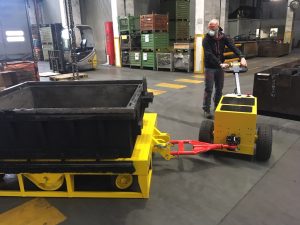
A forklift is designed for lifting and transporting loads, while a tow tug is primarily designed for pushing and pulling wheeled loads.
If a business needs to lift pallets from the ground, a forklift or pallet-handling machine may be more appropriate.
If the primary requirement is moving trailers, wagons, carts or containers that are already on wheels, an electric tug may offer a more targeted solution.
The right equipment therefore depends on the task rather than simply choosing the machine with the highest capacity.
Productivity: More Than Just Moving a Load
The value of an electric tug should also be assessed in terms of productivity.
Consider a workplace where an operator needs to reposition a heavy trailer several times throughout a shift. Manually pushing and pulling that trailer requires physical effort each time.
With an electric tug, the operator can use powered movement to perform the task.
Over hundreds or thousands of repeated movements, reducing the physical demand associated with each movement can have a meaningful operational benefit.
The OT-2500 also provides two speed settings. Its pulling speeds are approximately 2.5 km/h in slow mode and 4 km/h in fast mode, while pushing speeds are approximately 1.5 km/h and 3 km/h.
These controlled speeds can help operators select a movement rate appropriate to the task and workplace conditions.
Zero-Emission Electric Operation
Another advantage is the OT-2500’s zero-emission electric drive.
For businesses operating around workers, workshops, warehouses or enclosed areas, electric equipment can offer advantages over combustion-powered alternatives because it does not produce exhaust emissions during operation.
This can also support businesses looking to reduce reliance on petrol or diesel-powered equipment for suitable material-handling tasks.
However, battery-powered equipment still requires appropriate charging infrastructure, battery management and planned operating procedures.
The OT-2500’s specified AGM battery configuration has an approximate recharge time of eight hours, so businesses should consider charging requirements when planning daily operations.
A Pure Lead 90Ah C5 battery pack is also available as an alternative battery option.
Safety Should Be Part of the Investment Decision
When evaluating Alitrak vs Manual Handling, safety should be considered alongside productivity, efficiency and cost.
An electric tug is not automatically safer simply because it is powered. Safe operation depends on correct equipment selection, operator training, load stability, suitable attachments, workplace conditions, pedestrian controls and adherence to manufacturer requirements.
The OT-2500 includes features designed to support controlled operation, including an electromagnetic parking brake and integrated speed control.
Alitrak vs Manual Handling should also consider how powered movement can reduce the physical effort required for repetitive pushing and pulling tasks.
For businesses assessing Alitrak vs Manual Handling, appropriate training, risk assessment and operating procedures remain essential.
Ultimately, Alitrak vs Manual Handling should focus on selecting the most appropriate method for moving heavy loads safely and efficiently.
Businesses should also assess:
- The weight and dimensions of loads
- Surface conditions
- Gradients
- Pedestrian traffic
- Visibility
- Attachment compatibility
- Load stability
- Travel routes
- Emergency procedures
- Operator competency
- Battery charging requirements
A powered tug should be incorporated into the workplace’s overall risk-management process rather than treated as a standalone safety solution.
When Is an Electric Tug Worth the Investment?
An electric tug is more likely to provide a strong return on investment when heavy loads are moved frequently.
It may be worth considering when:
Heavy loads are moved repeatedly: Frequent pushing and pulling creates ongoing physical demands.
Workers are spending significant time repositioning equipment: Powered movement can improve task efficiency.
A forklift is excessive for the task: If the load only needs to be towed rather than lifted, a dedicated tug may be more suitable.
Loads are difficult to manoeuvre manually: Powered traction can reduce the physical effort required.
Multiple applications need the same type of movement: Accessories can help expand the tug’s usefulness.
The business wants zero-emission powered movement: Electric operation can be suitable for facilities seeking alternatives to combustion-powered equipment.
What Should Businesses Consider Before Buying?
The OT-2500’s 12,000 kg pulling capacity is a key feature, but capacity should not be the only purchasing consideration. When comparing Alitrak vs Manual Handling, businesses should assess the complete application and operating environment.
Start by identifying the heaviest loads that need to be moved and determine whether they will be pushed or pulled. Then consider the surface, gradients, travel distance, frequency of movement and available operating space.
The connection method is another important factor. The OT-2500 supports different hooks and accessories, but the selected attachment must be suitable for the specific load and application.
Battery requirements should also be considered. Businesses using the tug frequently should account for charging cycles, battery capacity and charging requirements when planning daily operations.
When evaluating Alitrak vs Manual Handling, businesses should also consider operator visibility, pedestrian traffic and the condition of travel paths. These factors can influence how safely and efficiently heavy loads are moved.
Maintenance requirements should form part of the decision as well. Regular inspections, battery maintenance and equipment servicing can help support reliable operation.
The total cost of ownership is another consideration. Businesses should look beyond the initial purchase price and consider productivity, maintenance, battery requirements and long-term usage.
Alitrak vs Manual Handling should also be assessed based on how often workers perform repetitive pushing and pulling tasks. Frequent manual movement may indicate a stronger case for powered assistance.
Training is equally important. Operators should understand the tug’s controls, operating limits, attachments and workplace procedures before using the equipment.
Ultimately, Alitrak vs Manual Handling is not simply a comparison of equipment and labour. It is an assessment of how heavy loads can be moved efficiently, consistently and appropriately for the workplace.
Alitrak vs Manual Handling: The Long-Term Value
The real question is not simply whether an electric tug costs more than manually moving a load.
The more useful question is what the business spends over time on repetitive manual effort, lost productivity, inefficient movement and workplace risk.
For operations that only move light loads occasionally, manual handling may remain appropriate where it can be performed safely.
For businesses regularly moving several-tonne trailers, wagons, caravans or commercial containers, however, powered assistance can make considerably more sense.
The Alitrak OT-2500 is designed specifically for this type of application. Its combination of a 12,000 kg pulling capacity, 2,500 W electric motor, three-wheel configuration, controlled operating speeds and accessory options makes it a versatile option for heavy-duty pedestrian towing.
Final Thoughts
So, are electric tugs worth it?
For the right application, they can be.
The key advantage of Alitrak vs Manual Handling is the ability to replace much of the physical pushing and pulling required to move heavy equipment with controlled electric power. Alitrak vs Manual Handling can help improve handling efficiency while reducing the physical demands of repetitive tasks.
The Alitrak OT-2500 is designed for applications involving trailers, caravans, wagons, waste containers and other heavy wheeled equipment. Its outdoor design, zero-emission electric drive and 12,000 kg pulling capacity make Alitrak vs Manual Handling a relevant consideration for industrial, commercial, transport, agricultural and waste-handling applications.
When evaluating Alitrak vs Manual Handling, businesses should consider load weight, terrain, movement frequency, attachment requirements, workplace layout and safety procedures.
For businesses regularly moving heavy wheeled equipment, Alitrak vs Manual Handling is ultimately about finding a more efficient approach to repetitive movement. Alitrak vs Manual Handling can help highlight where powered assistance may provide a practical alternative to relying solely on manual force.
The decision between Alitrak vs Manual Handling should always be based on the specific application, workplace requirements and appropriate risk assessment. Contact us now.