



Zallys Tug Range Comparison: Capacity, Features & Best Use Cases
When it comes to efficient material handling, selecting the correct electric tug is not just a matter of convenience—it directly influences throughput, workplace safety, and overall operational efficiency. In environments where heavy loads must be moved consistently and precisely, the wrong equipment can create bottlenecks, increase manual handling risks, and lead to unnecessary downtime. By contrast, the right solution enhances workflow continuity, reduces physical strain on operators, and supports a safer, more controlled handling process across the facility.
This Zallys Tug Range Comparison takes a closer look at three distinct machines designed to meet varying industrial demands: the Zallys M16 electric tug, the Zallys M18 electric tow tractor, and the Zallys M6.5 industrial cart mover. Each model has been engineered with specific use cases in mind—from mid-range applications requiring hydraulic lifting precision to heavy-duty operations where maximum towing capacity is critical, as well as compact environments where maneuverability is a priority.
Rather than offering a surface-level overview, this guide focuses on the practical differences that matter most in real-world scenarios. Key performance indicators such as towing capacity, lifting capability, battery autonomy, and machine dimensions are considered alongside operational factors like ease of use, safety features, and suitability for different industries. By breaking down these elements in a structured and accessible way, the goal is to provide a clear framework for decision-making.
Whether you are managing a warehouse, overseeing a manufacturing line, or optimizing logistics within a complex industrial setting, understanding how these machines compare will help you identify the most effective solution for your specific requirements.
Overview of the Zallys Tug Range


Zallys is known for manufacturing high-quality, Made in Italy electric tugs designed for industrial environments. Each model in this comparison serves a distinct purpose, whether it’s light-duty maneuvering or heavy-duty towing operations.
Here’s a quick snapshot:
| Model | Tow Capacity | Max Speed | Key Feature |
|---|---|---|---|
| M16 | 6,000 kg | 4 km/h | Hydraulic lifting system |
| M18 | 20,000 kg | 3 km/h | Heavy-duty hydraulic lifting |
| M6.5 | 6,000 kg | 4.5 km/h | Compact and highly maneuverable |
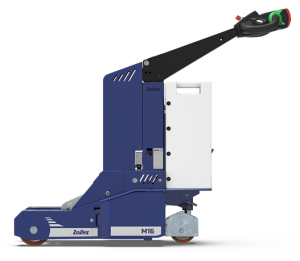
Zallys M16: Compact Power with Hydraulic Precision
Key Specifications
- Towing capacity: 6,000 kg
- Maximum lifting capacity: 1,800 kg
- Maximum speed: 4 km/h
- Weight: 142 kg
Features & Benefits
The defining feature of this model is its hydraulic lifting system, which enables operators to easily handle two-wheel trailers. This makes it ideal for environments where trailers need to be lifted on one side before movement.
Its interchangeable 45 Ah AGM batteries allow for continuous operation, making it suitable for facilities running multiple shifts. Quick battery replacement minimizes downtime and supports 24-hour workflows.
Best Use Cases
- Warehouses with moderate towing requirements
- Manufacturing lines using towable carts
- Logistics centers needing flexible trailer handling
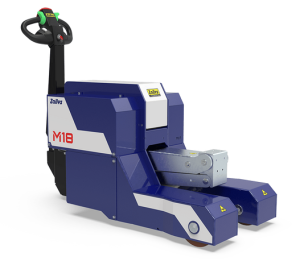
Zallys M18: Heavy-Duty Performance for Industrial Demands
Key Specifications
- Towing capacity: 20,000 kg
- Maximum lifting capacity: 8,000 kg
- Maximum speed: 3 km/h
- Weight: 366 kg
Features & Benefits
The M18’s high-capacity hydraulic lifting system allows it to handle extremely heavy two-wheeled trolleys with ease. Its 240 Ah AGM battery provides up to 8 hours of continuous operation, making it suitable for full work shifts without interruption.
Despite its size, the machine maintains controlled and precise movement, ensuring safety in demanding environments.
Best Use Cases
- Heavy manufacturing facilities
- Aerospace and automotive industries
- Large-scale logistics hubs
- Applications involving oversized or high-weight loads
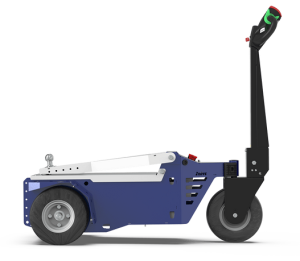
Zallys M6.5: Agile and Efficient Cart Mover
Key Specifications
- Towing capacity: 6,000 kg
- Maximum speed: 4.5 km/h
- Max slope capability: 15%
- Weight: 94 kg
Features & Benefits
This model features a steering rudder system with a deadman safety sensor, ensuring maximum operator control. Its electric brake system automatically engages when not in use, enhancing safety.
Additionally, the M6.5 can be configured for ATEX and IECEx certification, making it suitable for hazardous environments such as chemical plants or oil facilities.
Best Use Cases
- Tight warehouse spaces
- Retail stockroom logistics
- Facilities requiring high maneuverability
- Hazardous or explosive environments (with certification)
Direct Comparison: Which Model Should You Choose?
This Zallys Tug Range Comparison highlights that each machine is optimized for different operational demands.
Choose the M16 if:
- You need balanced performance
- Hydraulic lifting is essential
- You operate in medium-duty environments
Choose the M18 if:
- You handle extremely heavy loads
- Maximum towing and lifting capacity is required
- You need all-day operational endurance
Choose the M6.5 if:
- You prioritize maneuverability and compact design
- Your workspace is constrained
- You require optional explosion-proof certification
Key Factors to Consider When Selecting a Tug
Before making a decision, evaluate these critical factors:
1. Load Requirements
Always match the tug’s towing capacity to your heaviest loads. Overloading can reduce efficiency and increase wear.
2. Environment
Consider whether you operate in:
- Tight indoor spaces
- Open industrial yards
- Hazardous zones requiring certification
3. Duty Cycle
Battery capacity plays a major role in productivity. For continuous use, models like the M18 offer longer runtime.
4. Maneuverability vs Power
There is always a trade-off between compact design and raw towing strength. Choose based on your operational priorities.

Final Thoughts
This Zallys Tug Range Comparison reinforces a critical reality in industrial equipment selection: there is no universal solution that fits every application. Material handling environments vary widely in terms of load profiles, spatial constraints, duty cycles, and safety requirements. As a result, each machine in the Zallys lineup has been purpose-built to address a specific operational niche rather than attempting to serve all scenarios at once.
The Zallys M16 electric tug stands out as a highly adaptable option, particularly for operations that require a balance between towing performance and lifting capability. Its integrated hydraulic system makes it especially effective for handling two-wheel trailers, where controlled lifting is essential for safe and efficient movement. This makes it a strong fit for warehouses and production facilities that demand flexibility without stepping into heavy-duty territory.
At the upper end of the spectrum, the Zallys M18 electric tow tractor is engineered for environments where sheer power and endurance are non-negotiable. With substantially higher towing and lifting capacities, it is designed to manage the most demanding industrial loads with consistency and control. For sectors such as automotive manufacturing, aerospace, or large-scale logistics, this model provides the robustness needed to maintain productivity under high-load conditions.
Meanwhile, the Zallys M6.5 industrial cart mover fills a different but equally important role. Its compact footprint, responsive handling, and advanced safety features make it ideal for confined or complex layouts where maneuverability is critical. Additionally, its ability to be configured for hazardous environments expands its usability into specialized industries that require strict compliance with safety standards.
Ultimately, the key to maximizing return on investment lies in aligning equipment capabilities with your specific operational demands. Selecting the appropriate tug not only improves efficiency but also minimizes manual handling risks, reduces operator fatigue, and enhances overall workflow consistency. A well-matched machine becomes an integral part of your process optimization strategy rather than just a tool for moving loads.
For businesses currently assessing electric towing solutions, this comparison offers a structured perspective to support informed decision-making. By understanding the strengths and intended applications of each model, you can confidently choose a solution that delivers both immediate performance benefits and long-term operational value. Contact us now.