



Compact Cranes vs Hoists: Which Is Better for Tight Workspaces?
Introduction
JL 750 folding crane vs hoists is a common comparison for businesses working in tight or confined environments. Choosing the right lifting equipment directly impacts safety, efficiency, and workflow—especially in spaces where traditional systems struggle to operate.
In industries such as warehousing, manufacturing, and maintenance, the need for compact, mobile, and precise lifting solutions continues to grow. This is where the JL 750 folding crane stands out, offering a versatile alternative to fixed hoist systems.
Understanding Compact Cranes
Compact cranes—especially floor-mounted or mobile units—are designed for flexibility, mobility, and precision lifting in confined areas.
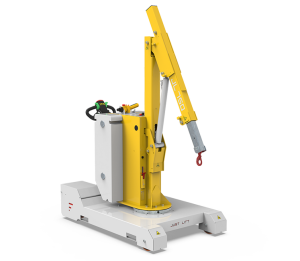
A leading example is the JL 750 folding crane, a hydraulic, counterbalanced lifting solution with a capacity of up to 800 kg. Unlike fixed lifting systems, it allows operators to move, position, and lift loads within the same workflow.
Key Features of the JL 750 Folding Crane
- Lifting capacity: Up to 800 kg
- Hydraulic lifting and arm extension for controlled operation
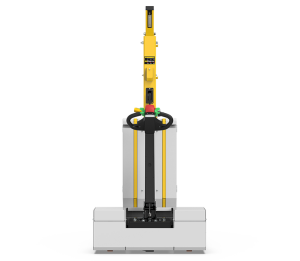
- Electric tiller drive system for easy maneuverability
- 270° rotation with locking intervals for precise positioning
- Anti-tipping system for enhanced safety
- Battery-powered operation for indoor use
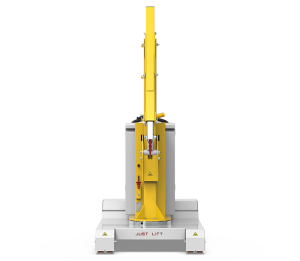
- Compact dimensions suited for tight workspaces
Its design prioritizes operator control, safety, and efficiency, making it ideal for environments where space constraints limit the use of traditional lifting equipment.
Understanding Hoists
Hoists are typically fixed or semi-fixed lifting systems that raise and lower loads vertically using chains, wire ropes, or belts.
They are commonly mounted on:
- Overhead beams
- Gantries
- Ceiling structures
Key Characteristics of Hoists
- Primarily vertical lifting only
- Require permanent or semi-permanent installation
- Often used for repetitive lifting tasks in fixed positions
- Can handle heavy loads depending on configuration
While hoists are effective in structured environments, their lack of mobility and limited range of motion can be restrictive in tight or dynamic workspaces.
Compact Cranes vs Hoists: Core Differences
1. Mobility and Flexibility
Compact Cranes (JL 750 folding crane):
- Fully mobile
- Can be repositioned easily
- Ideal for multi-task environments
Hoists:
- Fixed in one location
- Limited to the coverage area of the beam or track
Verdict:
For tight spaces requiring flexibility, compact cranes clearly outperform hoists.
2. Range of Motion
JL 750 Folding Crane:
- 270° rotation
- Adjustable arm extension
- Capable of lifting and positioning loads
Hoists:
- Vertical movement only
- Horizontal movement requires additional track systems
Verdict:
Compact cranes offer significantly greater operational versatility.
3. Space Efficiency
JL 750 Folding Crane:
- Designed specifically for confined environments
- Compact footprint with high maneuverability
Hoists:
- Require overhead clearance and structural support
- Not suitable where ceiling space is limited
Verdict:
Compact cranes are the better solution for restricted or low-clearance areas.
4. Installation and Setup
Compact Cranes:
- Minimal setup required
- No structural modifications needed
Hoists:
- Require installation on beams or gantries
- May involve engineering approvals and downtime
Verdict:
Compact cranes provide faster deployment and lower setup complexity.
5. Safety and Control
JL 750 Folding Crane:
- Anti-tipping system
- Smooth rotation via ball bearing turntable
- Wired controls for precise handling
Hoists:
- Safe for vertical lifting
- Limited control over load positioning without additional equipment
Verdict:
Both are safe when used correctly, but compact cranes provide greater control in complex lifting scenarios.
Application-Based Comparison
Warehousing and Logistics
In warehouses with narrow aisles and limited maneuvering space, the JL 750 folding crane allows operators to:
- Lift pallets or equipment
- Move loads between locations
- Operate without relying on fixed infrastructure
Hoists, by contrast, are only effective at designated lifting stations.
Best choice: Compact crane
Manufacturing and Assembly Lines
Manufacturing environments often require:
- Frequent repositioning of components
- Flexible lifting across multiple stations
The JL 750 enables multi-point lifting within a single shift, improving workflow efficiency.
Hoists are better suited for repetitive lifting at fixed stations.
Best choice: Depends on workflow
- Dynamic operations → Compact crane
- Repetitive fixed tasks → Hoist
Maintenance and Repair Workshops
Workshops often deal with:
- Engine removal
- Equipment servicing
- Irregular lifting tasks
The JL 750 folding crane excels here due to its:
- Mobility
- Precision control
- Compact footprint
Hoists may not be practical unless installed directly above the work area.
Best choice: Compact crane
Construction and Fit-Out Projects
In indoor construction or fit-out projects:
- Space is limited
- Layouts change frequently
A mobile solution like the JL 750 allows teams to adapt quickly without relying on fixed systems.
Best choice: Compact crane
Healthcare and Specialized Facilities
Hospitals, laboratories, and clean environments require:
- Quiet operation
- Precision handling
- Compact equipment
Battery-powered compact cranes like the JL 750 meet these requirements effectively.
Best choice: Compact crane
Why the JL 750 Folding Crane Stands Out
The JL 750 folding crane is specifically engineered to bridge the gap between traditional cranes and fixed hoists.
Performance Advantages
- High capacity in a compact form (up to 800 kg)
- Fluid 270° rotation for precise load placement
- Hydraulic arm extension for reach flexibility
- Electric drive system for easy navigation
Safety Enhancements
- Built-in anti-tipping system
- Stable counterbalanced design
- Controlled lifting via wired system
Operational Efficiency
- Reduces manual handling risks
- Speeds up lifting and positioning tasks
- Minimizes downtime associated with fixed equipment
When Should You Choose a Hoist?
Despite the advantages of compact cranes, hoists still have a place in certain environments.
Choose a hoist when:
- Lifting is repetitive and fixed in one location
- Overhead structures are already in place
- Loads need to be lifted straight up and down only
- Space constraints are less of a concern
When Is the JL 750 Folding Crane the Better Option?
The JL 750 folding crane is the better choice when:
- You’re working in tight or confined spaces
- Tasks require mobility and flexibility
- Loads need to be lifted and repositioned
- There is no overhead structure available
- You want to improve safety and reduce manual handling
Conclusion
Choosing between a compact crane and a hoist ultimately comes down to how and where the lifting task is performed.
Hoists are effective for fixed, repetitive lifting, but they lack the flexibility needed in dynamic environments. In contrast, compact cranes—particularly the JL 750 folding crane—offer a versatile, mobile, and efficient solution for tight workspaces.
With its 800 kg lifting capacity, hydraulic control system, and compact design, the JL 750 delivers a powerful combination of performance and adaptability. For industries that demand safe, precise, and flexible lifting in confined areas, it stands out as a practical and future-ready solution. Contact us now.