



5T vs 20T Tow Capacity: Which Electric Tug Do You Actually Need?
When selecting an Electric Tug for an industrial workplace, towing capacity is one of the first specifications to consider. But choosing the right machine is not simply a matter of selecting the highest towing capacity available.
A workplace moving a 3–5 tonne cart has very different requirements from a facility moving a 15–20 tonne industrial structure. Choosing an Electric Tug that is appropriately matched to the application can help businesses approach heavy material movement in a more controlled and practical way.
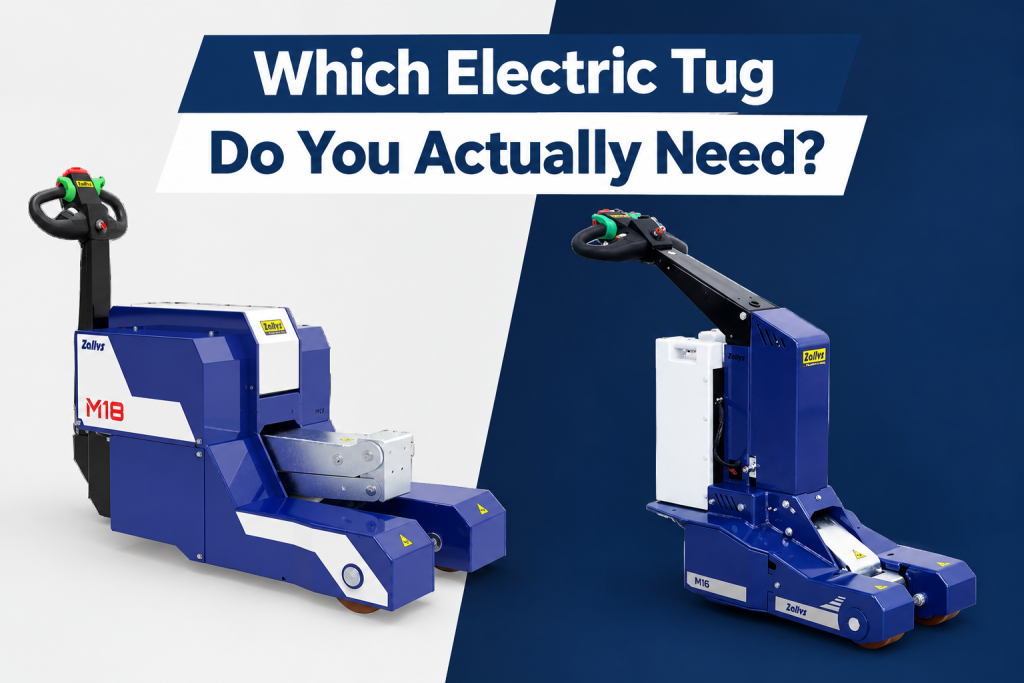
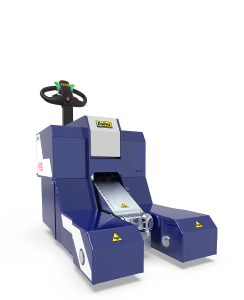
The Zallys M16 and Zallys M18, available through Emoveit, provide a useful comparison.
The M16 can tow up to 6,000 kg on flat ground and has a maximum lifting capacity of 1,800 kg. The M18 increases this considerably, with a towing capacity of up to 20,000 kg on level ground and a maximum lifting capacity of 8,000 kg.
While the article title refers to 5T versus 20T, the M16 is technically a 6T Electric Tug. It represents the lower capacity class in this comparison, while the M18 represents the 20T class.
So, which Electric Tug do you actually need?
The answer depends on the load, lifting requirement, operating environment and the way the equipment will be used.
What Is an Electric Tug?
An Electric Tug is a powered material-handling machine designed to move wheeled loads without relying entirely on manual pushing or pulling.
Depending on the model, an Electric Tug can be used to move carts, trailers, industrial equipment, linen trolleys, production loads and other wheeled materials.
For heavy-duty applications, the advantage is not simply the ability to move a heavy load. A suitable Electric Tug can provide a dedicated method of towing or pushing loads around a workplace while reducing the physical effort required from workers.
The Zallys M16 and M18 take this concept further by incorporating hydraulic lifting systems.
This is particularly useful for two-wheeled carts and trailers where one side needs to be lifted before the cart can be towed or pushed.
Why Tow Capacity Matters
Tow capacity indicates how much weight the Electric Tug is designed to pull or push under specified conditions.
However, tow capacity should not be confused with lifting capacity.
For example, the Zallys M16 is rated for:
- 6,000 kg towing capacity on flat ground
- 1,800 kg maximum lifting capacity
- 4 km/h maximum forward speed
- 4 km/h maximum reverse speed
- 24V electrical system
- 50 Ah interchangeable lithium battery pack
The Zallys M18 provides:
- 20,000 kg towing capacity
- 8,000 kg maximum lifting capacity
- 3 km/h maximum speed
- Four 240 Ah AGM batteries
- Up to 8 hours of continuous operating autonomy
- Five-level travel speed adjustment
These specifications demonstrate why the two machines are suited to different levels of industrial towing.
Zallys M16: The 5T-Class Electric Tug
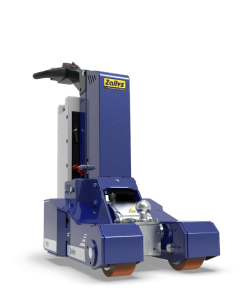
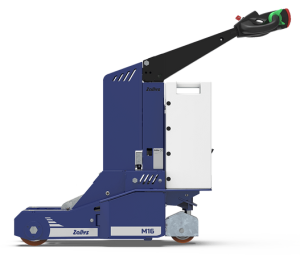
The Zallys M16 Electric Tug is designed for heavy-duty towing and pushing applications where wheeled loads need to be moved efficiently.
Although the M16 is sometimes considered in the 5T class for comparison purposes, its actual rated towing capacity is 6,000 kg on flat ground.
It can also lift up to 1,800 kg, making it suitable for two-wheeled carts and trailers that need to be raised on one side for towing or pushing.
The M16 has a maximum forward and reverse speed of 4 km/h.
One important consideration is that Emoveit specifies that the M16 cannot be used on slopes. Its towing capacity is also affected by factors such as the type of ground, wheels fitted to the tug and trailer, ballast and operating time.
This makes application assessment particularly important.
Example: Moving a 4-Tonne Production Cart
Consider an Australian manufacturing facility using a large two-wheeled production cart.
The empty cart weighs 1,500 kg, while the loaded cart weighs approximately 4,000 kg.
The cart needs to be moved between a production area and storage area several times throughout the day.
Manually pushing the loaded cart may require considerable physical effort, particularly when the movement is repeated.
A suitable Electric Tug such as the M16 can provide powered assistance for the towing operation, provided the complete application falls within the manufacturer’s specifications.
The M16’s hydraulic lifting system can also be used where the cart configuration requires one side to be lifted for towing.
This is an example of where a 6T towing capacity can provide a practical middle ground: substantial towing capability without automatically moving into the much higher capacity class of the M18.
Zallys M18: The 20T Electric Tug
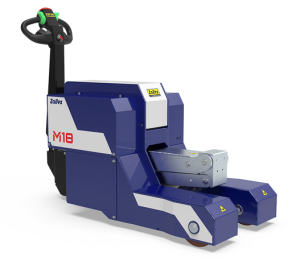
When the loads become substantially heavier, the Zallys M18 Electric Tug provides a much higher capacity solution.
The M18 is rated to tow up to 20,000 kg on level ground and lift up to 8,000 kg. Its maximum speed is 3 km/h.
The machine is designed to handle two-wheeled trolleys and structures that need to be raised on one side for towing and pushing operations.
This makes it particularly relevant to heavy industrial environments where conventional manual handling is not appropriate for the load.
The M18 also uses four 240 Ah AGM batteries as standard and is specified with up to 8 hours of continuous operating autonomy. The batteries are sealed and maintenance-free, according to the Emoveit product information.
Example: Moving a 15-Tonne Industrial Structure
Imagine a fabrication facility producing large metal structures.
A completed structure is positioned on a two-wheeled transport frame and needs to be moved from the fabrication area to another section of the facility.
The combined load is approximately 15 tonnes.
A 6T Electric Tug would not provide the required towing capacity for this application.
The M18, with its 20,000 kg towing capacity, provides a substantially higher-capacity option, subject to the manufacturer’s operating requirements and assessment of the specific application.
Emoveit specifically provides an example of the M18 being used to move heavy two-wheeled structures and metal components inside carpentry works, demonstrating the type of heavy industrial application for which the machine is intended.
M16 vs M18: Which Electric Tug Is the Better Choice?
The two models can be compared directly:
| Specification | Zallys M16 | Zallys M18 |
|---|---|---|
| Tow capacity | 6,000 kg | 20,000 kg |
| Maximum lifting capacity | 1,800 kg | 8,000 kg |
| Maximum speed | 4 km/h | 3 km/h |
| Battery | 50 Ah interchangeable lithium | 4 × 240 Ah AGM |
| Operating autonomy | Interchangeable battery system | Up to 8 hours continuous use |
| Hydraulic lifting | Yes | Yes |
| Primary application | Heavy carts and trailers | Very heavy carts and structures |
The difference is significant.
The M18 has more than three times the M16’s towing capacity and more than four times its lifting capacity.
However, that does not automatically make the M18 the better choice.
If a workplace routinely moves loads of approximately 3–5 tonnes, an M16 may be more closely aligned with the application.
If loads approach 10, 15 or 20 tonnes, the M18 becomes much more relevant.
The objective is to select the Electric Tug according to the actual application rather than simply choosing the machine with the largest specification.
What Else Should You Consider When Choosing an Electric Tug?
Tow capacity is important, but it is only one part of the equipment-selection process.
1. Total Load Weight
Start with the complete weight of the load.
This should include:
- The cart or trailer
- Materials being transported
- Equipment mounted on the cart
- Any additional payload
For example, a cart weighing 2,000 kg when empty may become a 5,000 kg load when fully loaded.
The operating weight, rather than the empty cart weight, should be considered when selecting the Electric Tug.
2. Lifting Requirement
If the tug needs to lift one side of a two-wheeled cart, lifting capacity becomes just as important as towing capacity.
The M16 provides up to 1,800 kg of lifting capacity, while the M18 provides up to 8,000 kg.
This can be a major differentiating factor between the two models.
3. Ground Conditions
The surface on which the load will be moved can affect towing performance.
Emoveit’s M16 specifications specifically note that towing capacity is influenced by the type of ground, slope, operating time, wheels and use of ballast. The M16 is not intended for slopes.
The M18 is also specified for its 20,000 kg towing capacity on level ground.
Businesses should therefore assess the actual route rather than selecting a tug based solely on the load’s weight.
4. Operating Distance and Duty Cycle
How often will the Electric Tug be used?
An occasional short-distance movement is different from continuous industrial towing throughout a work shift.
The M18 is specified with four 240 Ah AGM batteries providing up to eight hours of continuous operation.
The M16 uses an interchangeable 50 Ah lithium battery pack, while another M16 configuration listed by Emoveit uses interchangeable AGM batteries designed to support extended operation.
Battery configuration should therefore be considered alongside the expected operating cycle.
Top 5 Australian Industries That Can Use a Heavy-Duty Electric Tug
Heavy-duty Electric Tug applications are not limited to one industry.
Australian businesses across manufacturing, logistics, construction and other industrial sectors may use powered towing equipment to move wheeled loads.
The actual suitability of each model depends on the load and operating conditions.
1. Manufacturing
Manufacturing facilities often move components, production carts, tooling and work-in-progress between different areas.
Example
A manufacturing plant uses a 4,500 kg loaded production trolley.
The trolley is moved from fabrication to assembly multiple times each day.
A Zallys M16 could be considered where the application is on suitable level ground and falls within the machine’s towing and lifting specifications.
For substantially heavier structures, the M18 provides the higher-capacity option.
This can be particularly relevant in heavy fabrication environments where large structures and metal components need to be repositioned.
2. Warehousing and Distribution
Warehouses are commonly associated with forklifts and pallet handling, but not every load needs to be transported on a pallet.
Large industrial carts, roll cages, trailers and specialised wheeled equipment may need to be moved through warehouses and distribution facilities.
Example
A distribution operation uses heavy two-wheeled carts to transport packaged materials between processing and dispatch areas.
If the complete loaded cart is within the M16’s operating range, the M16 may provide an appropriate towing solution.
For significantly heavier industrial carts or structures, the M18 provides a 20T towing capacity.
This can allow the Electric Tug to be assigned specifically to towing duties rather than relying on larger equipment for every internal movement.
3. Ports and Shipping
Ports and shipping facilities can involve the movement of cargo equipment, trailers and specialised wheeled loads.
These environments may require repeated movement across defined internal routes.
Example
A port maintenance operation needs to reposition a heavy equipment trailer between designated maintenance areas.
Where the load is within the M16’s capacity and the route is suitable, the M16 can provide a compact powered towing solution.
Where the load approaches the higher industrial weight range, the M18 provides significantly greater towing capacity.
The actual route, surface, load configuration and site traffic conditions should be assessed before selecting equipment.
4. Construction and Fabrication
Construction yards and fabrication businesses can deal with large structures, frames, steel components and equipment that need to be repositioned around a site.
Example
A steel fabrication workshop uses wheeled frames to move completed structural assemblies.
A smaller assembly might fall within the M16’s 6,000 kg towing capacity.
A much larger structure weighing 10–15 tonnes would require consideration of a higher-capacity machine such as the M18.
Emoveit’s M18 application examples specifically include moving heavy two-wheeled structures and metal components in carpentry and fabrication environments.
5. Airports and Transport Hubs
Airports and transport facilities can use specialised carts, trailers and wheeled equipment for maintenance, cargo and internal logistics.
Example
A maintenance department uses heavy equipment carts that need to be moved between service areas.
Where the load falls within the M16’s specifications, the M16 may be considered.
For significantly heavier equipment or specialised structures, the M18 can provide substantially more towing and lifting capacity.
For airport applications, the operating environment needs to be assessed carefully, including traffic management, pedestrian interaction, surface conditions, travel routes and the configuration of the equipment being towed.
When Should You Choose the M16?
The Zallys M16 may be the more appropriate Electric Tug when your application involves:
- Loads up to 6,000 kg on suitable flat ground
- Two-wheeled carts or trailers
- A lifting requirement up to 1,800 kg
- Repeated internal towing operations
- A maximum operating speed of 4 km/h
- Applications where a compact heavy-duty towing machine is appropriate
It is particularly important to remember that the 6,000 kg specification is not a universal operating capacity under every condition. Emoveit states that towing performance is affected by ground conditions, wheels, ballast and operating time, and the M16 is not intended for slopes.
When Should You Choose the M18?
The Zallys M18 becomes more relevant when your application involves:
- Very heavy two-wheeled carts or structures
- Loads approaching 20,000 kg
- Lifting requirements up to 8,000 kg
- Heavy industrial fabrication
- Large metal components
- Long operating periods
- A requirement for up to eight hours of continuous operation using its standard battery configuration
Its five-level speed adjustment also allows the operator to select different speeds depending on the task. Emoveit describes the system as allowing lower speeds for tighter manoeuvring and higher speeds for longer straight travel.
Don’t Choose an Electric Tug Based on Capacity Alone
It is easy to look at a 20T rating and assume that more capacity automatically means a better machine.
That is not necessarily the case.
The best Electric Tug is the one that matches the application.
A business moving 4 tonnes does not necessarily need a 20-tonne tug.
Likewise, a business routinely moving 12–15 tonnes should not select a 6-tonne tug simply because it is smaller or less expensive.
The correct decision should consider:
Load weight + lifting requirement + ground conditions + route + operating frequency + cart configuration + required speed.
This approach provides a much more useful basis for selecting industrial towing equipment.
Final Thoughts
The difference between a 5T-class and 20T Electric Tug is substantial.
The Zallys M16 provides up to 6,000 kg of towing capacity and 1,800 kg of lifting capacity, making it a strong option for heavy carts and trailers within its operating specifications.
The Zallys M18 takes the capability considerably further, offering 20,000 kg of towing capacity and 8,000 kg of lifting capacity. It is designed for demanding industrial applications involving very heavy two-wheeled carts and structures, with up to eight hours of continuous operation from its standard battery configuration.
For Australian businesses, the key question is therefore not simply:
“How much can an Electric Tug tow?”
The better question is:
“What does our application actually require?”
If your workplace regularly moves heavy loads in the 5–6 tonne range, the M16 may provide the appropriate combination of towing and hydraulic lifting capability.
If your operation involves substantially heavier loads approaching 20 tonnes, the M18 provides the additional towing and lifting capacity required for those demanding applications.
Before selecting equipment, assess the complete load, route, ground conditions, lifting requirement and operating cycle. This ensures the Electric Tug is selected according to the real application rather than simply the largest available capacity.
To discuss the right Electric Tug for your application, contact Emoveit for assistance with selecting a suitable towing and material-handling solution.