



Alitrak OT-2500 vs Generic Electric Tugs: Performance, Safety & ROI Comparison
Choosing an electric tug is about more than finding a machine with enough towing capacity. For businesses moving trailers, caravans, wagons, waste containers and other heavy loads, the right tug needs to provide controlled movement, practical manoeuvrability, operator safety and reliable performance.
The Alitrak OT-2500 is designed for applications where substantial loads need to be moved without relying on manual pushing or towing. With a 2,500 W electric drive system, a rated pulling capacity of up to 12,000 kg and an EASY STEER control mechanism, it provides a useful benchmark when comparing purpose-built electric tugs with generic alternatives.
But what actually separates a specialised electric tug from a generic model?
The answer is not necessarily one specification. It is the combination of towing performance, steering and braking controls, application suitability, operator interaction, maintenance requirements and the potential return on investment.
This comparison looks at the factors businesses should consider when evaluating the Alitrak OT-2500 against a generic electric tug.
What Is the Alitrak OT-2500?
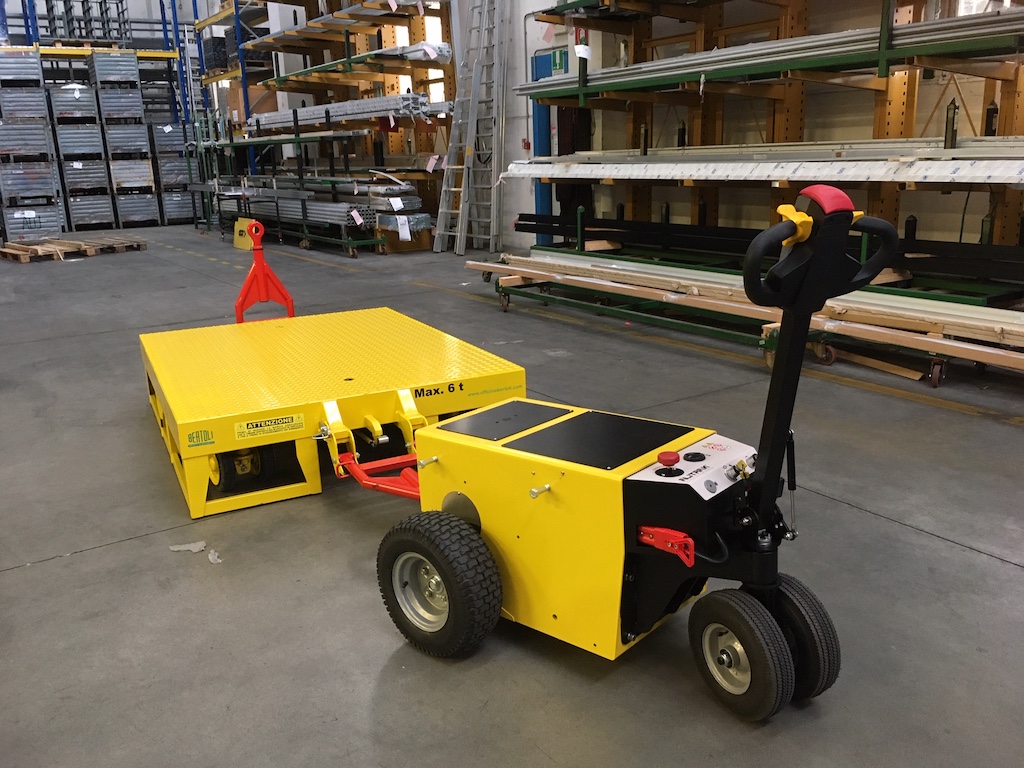
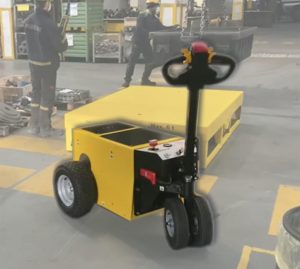
The Alitrak OT-2500 is a pedestrian-operated electric tug designed to move heavy trailers, caravans, wagons and commercial waste containers.
It uses a 2,500 W, 24 V AC electric drive system and can pull or push loads of up to 12,000 kg on suitable surfaces and conditions.
Rather than relying on an operator to manually push or pull heavy equipment, the electric drive system provides powered movement. This can help businesses approach repetitive material movement tasks with less dependence on manual force.
The OT-2500 also incorporates Alitrak’s EASY STEER control mechanism, which is designed to make steering and manoeuvring more manageable during operation.
Key features include:
- Up to 12,000 kg pulling/pushing capacity
- 2,500 W, 24 V AC electric motor
- EASY STEER control mechanism
- Three-wheel configuration
- Electromagnetic braking system
- Ergonomic pedestrian operation
- Dashboard displaying operating information
- Application flexibility for different towing requirements
These features make the OT-2500 particularly relevant to environments where heavy mobile equipment needs to be repositioned regularly.
Why Compare a Purpose-Built Tug With a Generic Electric Tug?
A generic electric tug may appear attractive because it can offer a lower purchase price or a basic powered movement solution.
However, purchase price is only one part of the equation.
An electric tug is a workplace tool. Its effectiveness depends on how well it matches the load, environment, operator requirements and frequency of use.
For example, two electric tugs may both advertise a high towing capacity, but that does not automatically mean they will perform identically in a real workplace.
Factors such as:
- Steering configuration
- Brake performance
- Load distribution
- Surface conditions
- Battery capacity
- Operating frequency
- Attachment options
- Operator controls
- Maintenance support
- Spare parts availability
can all influence the practical value of the equipment.
This is why businesses should look beyond headline capacity when comparing the Alitrak OT-2500 with generic electric tugs.
Alitrak OT-2500 Performance
Performance is one of the first areas to examine when choosing an electric tug.
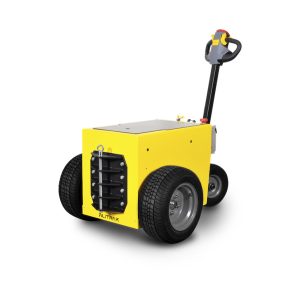
The OT-2500 is built around a 2,500 W, 24 V AC motor and has a stated pulling/pushing capacity of up to 12,000 kg.
That capacity makes it suitable for applications involving substantially heavier equipment than would normally be practical to move manually.
However, rated capacity should not be considered in isolation.
The actual load that an electric tug can safely and effectively move depends on several conditions. Surface type, gradients, wheel condition, load distribution, towing connection and environmental conditions can all influence performance.
For this reason, businesses should assess the complete application rather than selecting a tug purely because its advertised capacity appears sufficient.
Power for Repetitive Movement
The benefit of an electric tug becomes particularly apparent where heavy equipment must be moved repeatedly.
A task that is manageable once may become significantly more demanding when repeated throughout a shift.
Powered movement can provide a more consistent method of repositioning equipment and reduce the physical effort required from the operator.
For businesses moving the same types of loads throughout the day, this can make the difference between simply owning an electric tug and actually improving the movement process.
Steering and Manoeuvrability
Heavy loads can be difficult to manoeuvre, particularly in confined work areas.
The Alitrak OT-2500 uses an EASY STEER control mechanism intended to provide ergonomic control during operation.
This is an important consideration when comparing electric tugs.
A tug’s towing capacity tells you how much it can potentially move. Its steering system determines how effectively the operator can control that movement.
Three-wheel construction can also be useful in applications where manoeuvrability is important.
Businesses should consider the actual operating environment before choosing a tug. Ask:
- How much turning space is available?
- Are loads moved around corners?
- Are trailers positioned in confined areas?
- Does the operator need precise control?
- How frequently does the equipment need to be repositioned?
A tug that suits the movement environment can be more useful than one selected solely on maximum towing capacity.
Safety Considerations
Safety should be considered alongside productivity when evaluating powered towing equipment.
Moving a multi-tonne load introduces risks that are not present when moving lightweight equipment.
The goal is not simply to move the load. It is to maintain controlled movement throughout the task.
The OT-2500 incorporates an electromagnetic braking system, providing a dedicated braking function rather than relying solely on the operator to stop the machine through motor control.
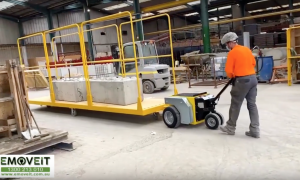
Its operator controls are also designed around pedestrian operation, allowing the user to control the tug while remaining outside the path of the load.
However, no electric tug eliminates workplace risk by itself.
Businesses should still consider:
- Load stability
- Towing connections
- Pedestrian interaction
- Travel paths
- Visibility
- Gradients
- Surface conditions
- Speed management
- Operator training
- Pre-start inspections
The appropriate control measures will depend on the specific workplace and application.
Electric Tug vs Manual Handling
One of the key reasons businesses investigate electric tugs is the physical effort involved in moving heavy equipment.
Manual handling can involve pushing, pulling, repositioning and controlling loads repeatedly throughout a working day.
Where a suitable mechanical aid is available, businesses can consider whether powered movement is more appropriate for the task.
The Alitrak OT-2500 provides powered towing and pushing rather than requiring the operator to generate the movement manually.
This can be particularly relevant in applications involving:
- Commercial waste containers
- Trailers
- Caravans
- Industrial wagons
- Heavy mobile equipment
- Repetitive repositioning tasks
The objective is not simply to replace a manual task with a machine. It is to develop a more controlled material movement process that suits the workplace.
Battery and Operating Considerations
Battery-powered equipment introduces another factor into the comparison.
Businesses need to consider how often the tug will be used, how far it will travel and how the charging process will fit into normal operations.
A tug that is technically capable of completing a task is not necessarily suitable if it cannot support the required operating schedule.
Before purchasing an electric tug, consider:
- Daily operating hours
- Number of movement cycles
- Charging opportunities
- Battery maintenance
- Battery replacement requirements
- Storage conditions
- Availability of charging facilities
These factors contribute to the total cost of ownership.
For a high-use application, battery performance can be just as important as the initial purchase price.
Application Flexibility
Another important consideration is whether an electric tug can adapt to the different types of equipment being moved.
The Alitrak OT-2500 is designed for applications including trailers, caravans, wagons and heavy commercial waste containers. This gives businesses the potential to use one powered movement solution across multiple tasks where the application and attachment configuration are suitable.
For companies handling different types of mobile equipment, this flexibility can be an important part of the purchasing decision. Rather than selecting a tug based solely on its maximum towing capacity, businesses should consider how well it fits their existing movement requirements.
The Alitrak OT-2500 can therefore be assessed not just by what it can tow, but by how effectively it can support different movement tasks across the workplace.
Instead of asking only, “How much can the tug pull?”, consider:
“How many of our movement problems can this tug solve?”
This shifts the comparison from a single specification to the overall usefulness and versatility of the electric tug.
Comparing the Alitrak OT-2500 With a Generic Electric Tug
A generic electric tug may provide powered movement, but businesses should examine how its features translate into actual workplace performance.
| Comparison Area | Alitrak OT-2500 | Generic Electric Tug |
|---|---|---|
| Drive system | 2,500 W, 24 V AC | Varies by model |
| Rated towing capacity | Up to 12,000 kg | Varies significantly |
| Steering | EASY STEER mechanism | Depends on design |
| Braking | Electromagnetic braking | Depends on model |
| Operation | Pedestrian-operated | Depends on model |
| Applications | Trailers, caravans, wagons, waste containers | Depends on configuration |
| Controls | Designed for powered towing operation | Varies |
| Attachments | Application-specific options available | Depends on supplier |
| Maintenance support | Consider supplier and product support | Varies |
| Total ownership cost | Assess against application and usage | Depends on purchase and operating costs |
The important point is that “generic electric tug” is not a single technical category.
Different manufacturers use different motors, batteries, steering systems, braking systems and chassis designs.
Therefore, businesses should compare the actual specifications and application requirements rather than assuming that every generic tug offers equivalent performance.
Calculating ROI From an Electric Tug
Return on investment is often discussed as if it were simply the purchase price versus labour savings.
In practice, ROI can involve several variables.
Consider a workplace where employees regularly move heavy equipment manually. The business could assess:
Current process costs
- Labour time spent moving equipment
- Number of movement tasks per day
- Distance travelled
- Number of operators involved
- Frequency of repetitive movements
- Downtime associated with repositioning
Electric tug costs
- Initial purchase
- Charging infrastructure
- Routine maintenance
- Battery replacement
- Operator training
- Attachments or accessories
The business can then compare the expected operating costs and productivity of each approach.
For example, if a task currently requires two workers for a repeated movement and an appropriate electric tug allows the same task to be performed with one trained operator, there may be a measurable labour-efficiency benefit.
The actual result will depend on the workplace and should be calculated using the company’s own operating data.
Total Cost of Ownership Matters
The cheapest electric tug to purchase is not automatically the lowest-cost solution over its working life.
Total cost of ownership can include:
Purchase price + charging + maintenance + consumables + battery replacement + downtime
Businesses should also consider whether replacement parts and technical support are readily available.
A lower-cost machine may become less economical if it requires more frequent servicing, has limited attachment options or does not adequately suit the application.
Conversely, a higher initial investment may be justified where equipment provides the required performance, reliability and application flexibility.
The correct comparison is therefore between the total cost of performing the task, rather than simply the price of the equipment.
Questions to Ask Before Choosing an Electric Tug
Before purchasing an Alitrak OT-2500 or another electric tug, businesses should document the application.
1. What is the actual load?
Determine the weight of the equipment being moved and allow for the complete towing configuration.
2. What type of surface will it operate on?
Concrete, asphalt, uneven surfaces and other conditions can affect traction and performance.
3. Are there gradients?
Inclines can significantly affect towing requirements. Always assess the actual operating environment against the manufacturer’s specifications.
4. How frequently will it operate?
An occasional movement task has different requirements from equipment used continuously throughout a shift.
5. How much manoeuvring is required?
Tight spaces, corners and confined loading areas make steering characteristics particularly important.
6. What safety controls are required?
Consider braking, visibility, pedestrian interaction, travel paths and operator training.
7. What attachments are required?
The connection between the tug and the load needs to be suitable for the equipment being moved.
8. What is the expected service life?
The expected working life of the machine should be considered when calculating ROI and total ownership cost.
Where the Alitrak OT-2500 May Fit
The Alitrak OT-2500 can be considered for workplaces where heavy mobile loads need to be moved regularly without relying on manual pushing or towing.
Potential applications include:
- Industrial facilities
- Commercial waste handling
- Transport and logistics operations
- Caravan and trailer facilities
- Warehousing and distribution environments
- Manufacturing sites
- Maintenance operations
- Equipment yards
The suitability of the tug depends on the specific load, surface, gradient, connection method and operating conditions.
Is a Generic Electric Tug Always the Same?
No.
This is one of the most important points when comparing powered towing equipment.
A generic tug may have a lower purchase price, but the specification needs to be examined carefully.
Look beyond the headline towing capacity and compare:
Motor power → steering → braking → battery → controls → attachments → support → maintenance → application suitability
A genuine comparison should establish whether both machines are designed for the same operating environment.
If one tug is designed for occasional light-duty movement and another is designed for demanding industrial towing, comparing their purchase prices alone does not provide a complete picture.
Making the Comparison Application-Specific
The Alitrak OT-2500 provides a useful example of why electric tug selection should be based on the complete application rather than a single specification.
Its 12,000 kg rated pulling/pushing capacity, 2,500 W AC drive system, EASY STEER mechanism and electromagnetic braking system address several important aspects of heavy-duty towing and powered movement.
However, businesses should still confirm that the Alitrak OT-2500 is appropriate for their specific load, surface conditions, gradients, towing configuration and operating requirements before making a purchasing decision.
The frequency of use should also be considered. A tug used for occasional equipment movement may have different requirements from one used repeatedly throughout a working day.
The most useful specification is ultimately the one that matches the real task. By assessing the load, environment, movement frequency and required level of control, businesses can make a more informed comparison between the Alitrak OT-2500 and other electric tug options.
Final Considerations
When comparing the Alitrak OT-2500 with a generic electric tug, the decision should go beyond purchase price or maximum towing capacity.
Performance, manoeuvrability, braking, operator controls, battery requirements, application flexibility, maintenance and total cost of ownership all contribute to the overall value of an electric towing solution.
The Alitrak OT-2500 is designed for heavy-duty powered movement, with a 2,500 W, 24 V AC motor and up to 12,000 kg pulling/pushing capacity. The Alitrak OT-2500 also features an EASY STEER control mechanism and electromagnetic braking system, providing important factors to consider when evaluating an electric tug for industrial applications.
For businesses investigating electric towing equipment, the next step is to assess the actual movement task.
What needs to be moved? How heavy is it? How often does it move? What surfaces and gradients are involved? How much manoeuvring is required? What controls are needed to manage the task safely?
Answering these questions can help determine whether the Alitrak OT-2500 or another electric tug is appropriate for the application.
To discuss electric towing requirements and find a suitable solution for your workplace, contact Emoveit.