



Indoor Tug 1200: Alitrak Electric Tugs vs Manual Handling – Cost, Safety & Productivity Comparison
In modern warehouses, manufacturing plants, logistics hubs, and industrial facilities, material movement is not a secondary task—it is a core operational function that directly affects throughput, labour efficiency, and workplace safety. Every trolley moved, every bin repositioned, and every load transferred contributes to the overall speed and reliability of operations.
Despite this, many sites still rely heavily on manual handling methods or basic towing techniques to move heavy wheeled loads. While this approach may appear cost-effective at first, it introduces significant long-term inefficiencies, especially as load weights increase, shift demands intensify, and safety regulations become more stringent.
Manual handling is increasingly misaligned with modern industrial requirements. It relies entirely on human physical capacity, creates inconsistent performance output, and exposes workers to avoidable ergonomic risks. As operational demands scale, these limitations become more pronounced, resulting in delays, injuries, and workflow bottlenecks.
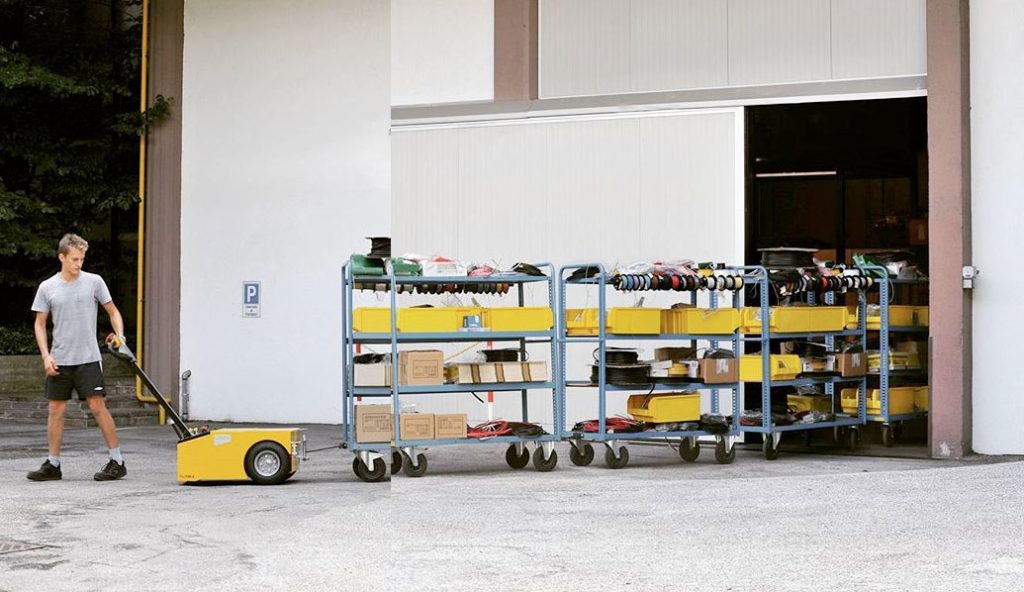
This is where the Alitrak Indoor Tug 1200 (IT-1200) fundamentally changes operational performance. Designed specifically for indoor towing applications, the Indoor Tug 1200 replaces physical pushing and pulling with controlled electric traction, enabling safe, consistent, and highly efficient movement of heavy wheeled loads.
Instead of relying on manual force, the system uses engineered motor-driven torque delivered through a compact, highly manoeuvrable platform. This allows operators to move loads with precision, even in tight corridors, loading bays, or high-traffic warehouse environments where manual handling typically becomes unsafe or inefficient.
At a strategic level, adopting the Indoor Tug 1200 is not simply an equipment upgrade—it represents a shift from labour-dependent logistics to engineered material handling systems designed for consistency, safety, and scalability.
The comparison between the Alitrak Electric Tug IT-1200 and manual handling can be assessed across three critical business dimensions:
- Cost efficiency: total labour utilisation, downtime reduction, and injury-related cost savings
- Workplace safety: reduction of musculoskeletal strain and manual force exposure
- Productivity improvement: consistency, speed, and scalability of material movement
When evaluated through these lenses, manual handling introduces hidden operational costs that accumulate over time, while the Indoor Tug 1200 delivers structured efficiency gains that improve both safety performance and operational throughput.
The Problem with Manual Handling in Industrial Environments
Manual handling still exists in many workplaces due to habit, perceived cost savings, or lack of awareness of alternatives. However, it introduces significant operational limitations.
1. High Physical Strain on Workers
Manually moving loaded trolleys or bins—especially on uneven or confined indoor surfaces—requires sustained force. Over time, this leads to:
- Musculoskeletal injuries (back, shoulders, wrists)
- Worker fatigue and reduced performance
- Increased absenteeism and compensation claims
Even moderate loads become hazardous when movement is repetitive or involves tight turning spaces.
2. Limited Load Capacity
Manual handling is constrained by human strength. While regulations vary, safe pushing/pulling limits are significantly lower than what industrial operations typically require. This leads to:
- Multiple operators needed per task
- Inefficient workflows
- Bottlenecks in production and logistics
3. Safety Risks and Compliance Pressure
Manual towing increases the likelihood of:
- Slips, trips, and falls
- Loss of load control
- Collisions in busy environments
- Non-compliance with workplace safety standards
These risks are not just operational—they are financial liabilities.
4. Inefficient Use of Skilled Labour
Using trained staff for physically demanding movement tasks reduces their availability for higher-value work such as quality control, assembly, or logistics planning.
Introducing the Alitrak Indoor Tug 1200 (IT-1200)
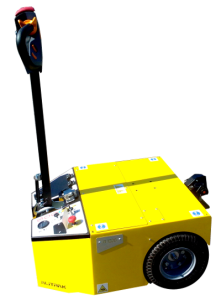
The Alitrak IT-1200 Indoor Tug 1200 is a compact, electrically powered towing unit designed specifically for indoor industrial environments. It replaces manual pushing and pulling with controlled electric traction.
It is engineered to move heavy wheeled loads safely and efficiently, reducing operator strain while improving workflow speed.
Key Purpose
The Indoor Tug 1200 is designed to:
- Move trailer trolleys and wheeled containers
- Reduce manual force required for towing
- Improve workplace safety and ergonomics
- Increase operational throughput
Technical Specifications of the Indoor Tug 1200
Understanding the technical capabilities of the Alitrak IT-1200 Indoor Tug 1200 is essential when evaluating its performance advantage over manual handling.
Core Performance
- Pulling capacity (flat surface): 4000 kg
- Loading capacity (flat surface): 500 kg
This capacity alone places it far beyond manual handling capability, enabling movement of heavy industrial loads with minimal operator effort.
Motor & Power System
- Motor: 24V / 1200 Watt AC
- Electric motor rating: AC 24V / 1200W S2 60 min
- Battery: AGM 2 × 12V / 85 Ah C20
- Battery charging time: approx. 8 hours
- On-board charger: 13A high-frequency system
The 1200-watt motor provides consistent torque, ensuring stable pulling performance even under load.
Speed Options
- Pulling speed:
- Fast: 5 km/h
- Slow: 2.5 km/h
- Pushing speed:
- Fast: 3.5 km/h
- Slow: 1.8 km/h
This dual-speed system allows precise control in tight indoor environments.
Dimensions & Build
- Length: 1450 mm
- Width: 790 mm
- Height: 1050 mm
- Weight: 150 kg
- Wheels: 3-wheel configuration (low clearance design)
The compact footprint makes the Indoor Tug 1200 suitable for confined spaces such as warehouses, loading bays, production floors, and service corridors.
Control & Safety Features
- Tiller steering for precise maneuverability
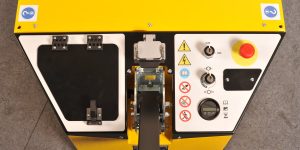
- Electromagnetic parking brake
- Oil bath differential for durability
- Dashboard display (battery level, hour meter, fault indication)
These features ensure controlled operation and real-time system monitoring.

Cost Comparison: Indoor Tug 1200 vs Manual Handling
At first glance, manual handling appears cost-effective because it requires no equipment investment. However, this view ignores hidden operational costs.
1. Labour Costs
Manual handling requires:
- Multiple workers for heavy loads
- Longer task completion times
- Higher overtime costs during peak periods
In contrast, the Indoor Tug 1200 allows:
- Single-operator load movement
- Faster task completion
- Reduced dependency on additional labour
2. Injury and Compensation Costs
Workplace injuries related to manual handling are among the most common claims in industrial environments. These lead to:
- Workers’ compensation payouts
- Medical expenses
- Lost productivity during recovery
- Potential legal compliance costs
The Indoor Tug 1200 significantly reduces physical strain, lowering long-term injury risk and associated costs.
3. Operational Downtime
Manual handling inefficiencies often create bottlenecks. Delays in moving materials can disrupt:
- Production schedules
- Dispatch timelines
- Equipment utilization rates
With a powered solution like the Indoor Tug 1200, movement becomes predictable and consistent.
4. Return on Investment (ROI)
While the tug requires upfront capital investment, ROI is driven by:
- Reduced labour requirements
- Lower injury-related costs
- Improved workflow efficiency
- Increased throughput
In most industrial environments, the payback period is significantly shorter than expected due to cumulative efficiency gains.
Safety Comparison: Why the Indoor Tug 1200 Outperforms Manual Handling
Safety is arguably the most important factor when evaluating material handling systems.
1. Reduced Musculoskeletal Load
Manual handling exposes workers to repetitive strain injuries. The Indoor Tug 1200 eliminates the need for:
- Heavy pushing force
- Sustained pulling effort
- Awkward body positioning
This dramatically reduces physical strain.
2. Controlled Load Movement
The electric drive system ensures:
- Smooth acceleration
- Controlled braking
- Stable directional movement
This reduces the risk of sudden load shifts or operator loss of control.
3. Improved Visibility and Awareness
The tiller-controlled interface gives operators:
- Better spatial control
- Safer navigation in tight spaces
- Reduced collision risk
4. Emergency Control Features
The electromagnetic parking brake ensures the unit remains stable when stopped, even on inclines or during pauses.
5. Compliance with Workplace Safety Standards
Many workplace safety frameworks now emphasize:
- Minimizing manual force exposure
- Engineering controls over administrative controls
- Ergonomic material handling systems
The Indoor Tug 1200 aligns directly with these principles.
Productivity Comparison: Manual Handling vs Indoor Tug 1200
Productivity gains are where the Indoor Tug 1200 delivers its most immediate impact.
1. Faster Material Movement
With speeds up to 5 km/h, the tug enables consistent and rapid transport of loads across indoor facilities.
Manual handling speed is highly variable and depends on:
- Worker fatigue
- Load weight
- Environmental conditions
2. Single-Operator Efficiency
One operator using the Indoor Tug 1200 can replace:
- Two to four manual handlers depending on load type
This frees up labour for higher-value tasks.
3. Reduced Fatigue = Consistent Output
Manual handling performance drops throughout the day due to fatigue. The electric tug maintains:
- Consistent speed
- Consistent control
- Consistent output
4. Improved Workflow Integration
The Indoor Tug 1200 integrates easily into:
- Warehouse logistics systems
- Production line feeding
- Dispatch operations
- Maintenance transport tasks
This creates a continuous flow of materials with minimal interruption.
Ideal Applications for the Indoor Tug 1200
The Alitrak Indoor Tug 1200 is suitable for a wide range of industries, including:
- Warehousing and logistics
- Manufacturing plants
- Food and beverage production
- Airports and transport hubs
- Automotive workshops
- Retail distribution centres
It is particularly effective in environments where wheeled loads are frequently moved over short to medium distances indoors.
Why the Indoor Tug 1200 is a Strategic Upgrade
Upgrading from manual handling to the Alitrak Indoor Tug 1200 is not just an equipment change—it is an operational improvement strategy.
It delivers:
- Reduced workplace injury risk
- Lower long-term operational costs
- Increased throughput and efficiency
- Improved staff wellbeing
- Greater compliance with safety standards
Conclusion
When comparing manual handling with the Alitrak Indoor Tug 1200 (IT-1200), the differences are clear and measurable across all key performance areas.
Manual handling may appear cost-effective initially, but it introduces hidden costs in labour inefficiency, injury risk, and productivity loss. In contrast, the Indoor Tug 1200 provides a controlled, high-capacity, and ergonomically sound solution for modern industrial environments.
With a 4000 kg pulling capacity, 1200W AC motor, and advanced control features, the Indoor Tug 1200 is engineered to replace physically demanding manual movement with safe, efficient electric towing.
For organisations looking to improve safety, reduce costs, and increase operational efficiency, the transition to an electric indoor tug is no longer optional—it is a strategic necessity. Contact us now.