



Mobile Wheelie Bin Washer vs Manual Emptying: Safety, Cost & Productivity Comparison
Why the Shift Toward Safer Bin Handling Matters
In workplaces where waste management is a daily task, the method used to empty and clean bins directly impacts safety, efficiency, and operational cost. From warehouses and food processing facilities to healthcare environments and public spaces, manual bin handling remains common—but is increasingly under scrutiny.
Manual emptying typically involves lifting, tipping, and washing bins by hand, exposing operators to repetitive strain, poor posture, and hygiene risks. A Mobile Wheelie Bin Washer, however, provides a controlled and ergonomic alternative by lifting and positioning bins at an optimal height for safe and efficient cleaning.
This article compares manual emptying with bin tippers—specifically Mobile Wheelie Bin Washer systems—across three critical areas: safety, cost, and productivity, helping businesses identify a more effective approach to bin handling.
What Is a Mobile Wheelie Bin Washer?
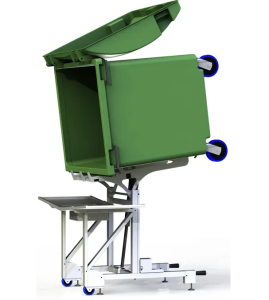
Key capabilities include:
- Lifting bins up to 80 kg
- Tip height of up to 1000 mm
- Compatibility with 80L to 1100L wheelie bins
- Operation without mains electricity (reducing electrical hazards)
- Ergonomic positioning to eliminate bending and awkward handling
Rather than forcing workers to clean bins at ground level, the system raises the bin into an optimal position for washdown, improving both safety and cleaning quality.
1. Safety Comparison
Manual Emptying Risks
Manual bin emptying exposes workers to several well-documented hazards:
- Musculoskeletal injuries from repetitive bending and lifting
- Back strain and fatigue due to poor posture
- Slip hazards from uncontrolled waste spillage
- Exposure to bacteria and contaminants during cleaning
Over time, these risks can lead to lost-time injuries, workers’ compensation claims, and reduced workforce capacity.
Mobile Wheelie Bin Washer Advantages
Using a Mobile Wheelie Bin Washer significantly reduces these risks:
- Ergonomic lifting eliminates the need to bend or manually tip bins
- Controlled tipping mechanism ensures stability during operation
- Improved hygiene by positioning bins for thorough washdown
- No electrical dependency, minimizing shock risk in wet environments
By raising bins to waist height and stabilizing them during cleaning, operators maintain neutral posture and avoid repetitive strain.
Outcome:
A clear reduction in workplace injuries and improved compliance with manual handling safety guidelines.
2. Cost Comparison
Hidden Costs of Manual Handling
While manual emptying appears low-cost on the surface, it introduces several indirect expenses:
- Workplace injuries and compensation claims
- Increased sick leave and staff turnover
- Slower cleaning times (higher labor cost per task)
- Inconsistent cleaning leading to hygiene issues or regulatory risks
These hidden costs often exceed the initial investment required for mechanical solutions.
Investment in a Mobile Wheelie Bin Washer
A Mobile Wheelie Bin Washer represents a capital investment, but delivers measurable cost benefits:
- Reduced injury-related expenses
- Lower labor time per cleaning cycle
- Minimal maintenance requirements
- No need for complex infrastructure or power supply
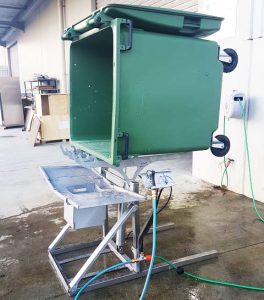
The BinBlaster system, for example, is designed with durable galvanized steel construction and requires very little upkeep, making it a long-term, cost-efficient solution.
Outcome:
Lower total cost of ownership when factoring in safety, efficiency, and reduced downtime.
3. Productivity Comparison
Manual Cleaning Limitations
Manual bin cleaning is inherently inefficient:
- Time-consuming positioning and handling
- Inconsistent cleaning quality
- Worker fatigue reducing output over time
- Limited ability to scale operations
In high-volume environments, this creates bottlenecks and delays.
Productivity Gains with a Mobile Wheelie Bin Washer
A Mobile Wheelie Bin Washer improves workflow efficiency by:
- Reducing handling time with quick lift-and-tip operation
- Standardizing cleaning processes for consistent results
- Allowing single-operator use, improving labor allocation
- Supporting higher throughput in busy environments
With a simple lever action, bins are lifted and positioned instantly, enabling faster and more effective cleaning cycles.
Outcome:
Increased operational efficiency and the ability to handle higher volumes without additional labor.
Application-Based Use Cases: Top 5 Industries in Australia
1. Healthcare & Hospitals
Hospitals require strict hygiene standards. A Mobile Wheelie Bin Washer ensures bins are thoroughly cleaned without exposing staff to contaminants or manual strain.
2. Food Processing & Manufacturing
In environments where cleanliness is critical, improper bin cleaning can lead to contamination risks. Elevated bin washing improves sanitation and compliance with food safety regulations.
3. Facilities Management & Cleaning Contractors
Contract cleaning teams benefit from faster turnaround times and reduced physical strain, allowing them to service more sites efficiently.
4. Local Councils & Waste Management Services
Councils handling large volumes of public waste bins can streamline cleaning operations while reducing worker injuries and downtime.
5. Warehousing & Logistics
Distribution centers generate significant waste from packaging materials. A Mobile Wheelie Bin Washer supports efficient bin maintenance without disrupting workflow.
Key Takeaways
When comparing bin tippers vs manual emptying, the differences are clear:
| Factor | Manual Emptying | Mobile Wheelie Bin Washer |
|---|---|---|
| Safety | High injury risk | Ergonomic and controlled |
| Cost | Hidden long-term expenses | Lower total cost over time |
| Productivity | Slow and inconsistent | Fast, efficient, scalable |
Manual methods may still exist in some operations, but they no longer align with modern safety and efficiency standards.
Conclusion
The transition from manual bin handling to mechanical solutions is not just an upgrade—it’s a necessary step toward safer and more efficient operations.
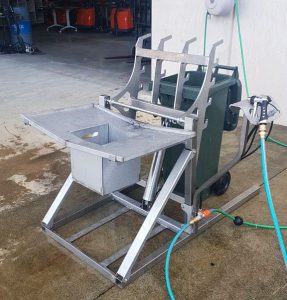
A Mobile Wheelie Bin Washer like the BinBlaster BB1000 eliminates the physical strain of bending and lifting, improves hygiene outcomes, and streamlines cleaning processes. With its ability to handle bins from 80L to 1100L, operate without mains electricity, and deliver consistent performance, it represents a practical solution across multiple industries.
For organizations looking to reduce risk, control costs, and improve productivity, adopting a mobile bin tipping and washing system is a clear and measurable improvement over manual methods. Contact us now.